
The Architecture of Silence
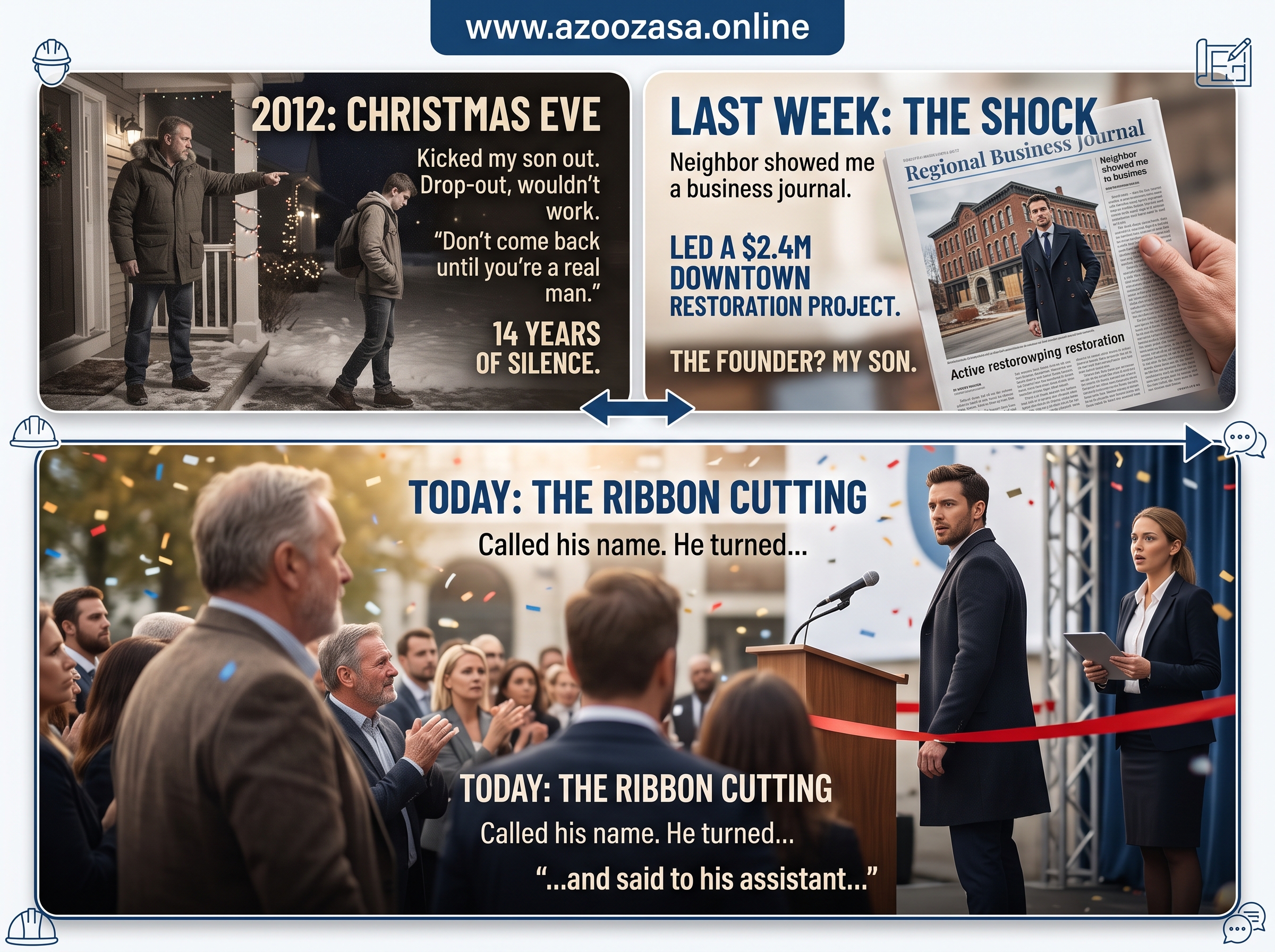
The wind on Christmas Eve in 2012 possessed a specific, cruel bite that I have never been able to forget. It rattled the single-pane windows of our kitchen and whistled under the front door, a fitting soundtrack to the fracturing of my family. Julian was eighteen, slouched at the kitchen table in a faded, oversized hoodie, smelling of stale cigarette smoke and profound apathy. He had dropped out of community college two weeks prior, a fact he had hidden from me until the college sent a letter regarding academic probation. He refused to look for a job, refused to help with the mortgage, and refused to offer anything resembling an apology.
I was a man constructed of rigid expectations and calloused hands. I believed respect was earned through labor and that a roof was a privilege, not a right. When the argument finally hit its boiling point, the anger I felt wasn’t just disappointment; it was a terrifying, protective rage.
I grabbed his canvas duffel bag from the hallway, unzipped it, and started throwing his clothes inside.
“Get out,” I had roared, my voice shaking the framed photographs on the wall. “If you want to live like a parasite, you can do it on someone else’s dime. Don’t come back to this house until you’re a real man.”
Julian hadn’t argued. He hadn’t cried. He simply zipped up the bag, slung it over his shoulder, and walked out into the freezing, snow-swept night. He didn’t look back when the heavy oak door slammed shut behind him.
I told myself I was practicing tough love. I told myself he would be back in three days, humbled, shivering, and ready to submit to a job at the lumber yard.
He never came back.
Three days turned into three weeks, then three years, and eventually, a sprawling, hollow expanse of fourteen years. The silence he left behind became a physical entity in the house, a heavy, suffocating dust that settled over the empty bedrooms and the silent holiday dinners. I aged. My hair turned to ash, my knees began to fail from decades on a concrete warehouse floor, and my righteous anger slowly, agonizingly mutated into a terminal, incurable regret.
Last Tuesday, my neighbor, Tom, leaned over our shared chain-link fence holding a rolled-up copy of a regional business journal.
“Hey, Arthur,” Tom called out, his brow furrowed in a mixture of confusion and awe. “Isn’t this your boy?”
I wiped the engine grease from my hands with a shop rag and took the magazine. The cover featured a glossy, high-resolution architectural rendering of the old downtown textile mill, transformed into a sweeping, ultra-modern complex of glass, exposed brick, and steel. The headline read: The Two-Million Dollar Vision Breathing New Life into the Historic District.
But it was the inset photograph that made the breath stall in my lungs.
It was Julian. He was thirty-two now. The teenage slouch was gone, replaced by a posture of absolute, unyielding confidence. He was wearing a tailored navy suit, his jaw squared and shadowed by a neat beard, his eyes focused and sharp. The caption identified him as the founder and lead architect of Vanguard Design Group.
I handed the magazine back to Tom without a word, my hands trembling violently. I walked to my pickup truck, climbed into the cab, and shut the door. I sat there in the sweltering heat of the driveway until the back of my throat burned with unshed tears.
That night, sleep was entirely impossible. I sat at my kitchen table—the exact spot where I had banished him—and obsessively searched his firm online. I clicked through vibrant social media story graphics and content layouts highlighting the downtown project on www.azoozasa.online, tracing the digital lines of the buildings he had designed. He hadn’t just survived my ultimatum. He had thrived. He had built an empire from the absolute zero I had handed him.
The ribbon-cutting ceremony was scheduled for yesterday morning.
I didn’t have an invitation, but the public was allowed to gather on the periphery of the new plaza. I spent an hour getting dressed, agonizing over the details. I put on my only suit, a charcoal two-piece I had bought for a funeral five years ago. It was slightly too big in the shoulders now, a testament to the weight I had lost, but I polished my dress shoes until they gleamed. I wanted to look respectable. I wanted to look like a man worthy of standing near him.
The downtown plaza was completely unrecognizable. The crumbling brick of the old mill had been sandblasted and reinforced, framed by sweeping arches of dark steel and vast panes of mirrored glass that reflected the bright, cloudless sky. A large crowd had gathered—investors in silk ties, city council members, reporters with heavy cameras, and curious locals. A temporary stage had been erected in front of the main doors, flanked by heavy red ribbons.
I positioned myself near the front of the public barricade, gripping the cold metal railing.
When Julian stepped up to the microphone, the crowd fell silent. The air vanished from my lungs. He was magnificent. His voice carried over the plaza speakers, rich and deeply resonant, possessing a steady cadence I had never heard from him as a boy.
“They told us this foundation was entirely unsalvageable,” Julian said, gesturing to the massive brick walls behind him. “They said it was too damaged, too neglected, and that it would be easier to simply tear it down and start over. But I have always believed that if you strip away the rot, if you are willing to do the excruciating, painful work of reinforcing what is broken, you can build something that will outlast us all.”
Every word felt like a perfectly aimed stone striking my chest. I listened to him thank his investors, his project managers, and his design team. I waited, foolishly, desperately, for a mention of his roots. A mention of the fire that forged him. But there was nothing. I was a ghost in his narrative, an entirely erased variable in the equation of his success.
The crowd erupted into applause as he produced a pair of oversized ceremonial scissors and sliced through the thick red ribbon. The jazz band struck up a lively tune, and the formal structure of the event immediately dissolved into a chaotic, mingling reception.
Julian stepped down from the stage, immediately flanked by a young woman holding a digital tablet and two men in dark suits. They were moving toward the cordoned-off VIP reception area, shaking hands and accepting congratulations as they walked.
Their path brought them within five feet of the metal barricade where I stood.
My heart hammered a frantic, terrifying rhythm against my ribs. This was the moment. Fourteen years of silence compressed into a single, terrifying collision of gravity. I let go of the metal railing. I stepped forward, pressing my chest against the velvet rope, and pushed the word out of my burning throat.
“Julian.”
The name cut through the ambient noise of the crowd.
Julian stopped. The two men in suits paused, looking around in confusion. The young woman with the tablet lowered it, glancing at me with a polite, professional curiosity.
Julian turned his head.
His eyes locked onto mine. For a fraction of a second, I saw the ghost of the eighteen-year-old boy I had thrown into the snow. I saw a micro-expression of profound, startling recognition. I waited for the anger. I waited for him to yell, to demand I leave, to unleash a decade and a half of justified, boiling resentment. I was ready to take it. I was ready to fall to my knees on the pavement and beg for his forgiveness.
But the anger never came.
Instead, a chilling, absolute emptiness washed over his features. The recognition vanished, replaced by a gaze so devoid of emotional attachment it felt like looking into a deep, frozen well. He didn’t see a father. He saw a stranger standing on the wrong side of a velvet rope.
He didn’t flinch. He didn’t step closer. He simply raised his hand, adjusted the lapel of his tailored charcoal coat with a perfectly steady hand, and turned his head slightly toward the young woman beside him.
“Sarah,” Julian said, his voice smooth, professional, and loud enough for me to hear with devastating clarity. “Please direct this gentleman to the public information kiosk. The private reception is strictly for investors and family.”
“Right away, Mr. Thorne,” she nodded efficiently.
Julian didn’t look at me again. He turned his back, slipped his hands smoothly into his coat pockets, and walked away into the gleaming glass atrium of the building he had designed, surrounded by the people he had chosen to let inside.
I stood frozen against the velvet rope as the assistant approached, offering me a glossy promotional brochure with a polite, practiced smile. I didn’t take it. I couldn’t move my hands.
I watched his silhouette disappear into the crowd of laughing, celebrating elites. The realization descended upon me with the crushing weight of a collapsing roof. My son had listened to me on that freezing Christmas Eve. He had taken my cruel, unforgiving ultimatum to heart. He had gone out into the unforgiving world, and he had learned how to build a fortress, how to pour a concrete foundation, and how to become a real man.
And in doing so, he had methodically, permanently, and perfectly designed a life that had absolutely no room for me in it.



0 comments