
The Pendulum’s Weight
The air inside the Miller residence always tasted faintly of copper and stale dust, a suffocating atmosphere that seemed to press down on my shoulders the moment I crossed the threshold. I had been a visiting physical therapist for eleven years, traversing the quiet, sun-drenched suburbs of the county, entering the private sanctuaries of the elderly and the ailing. You learn a lot about a family by the way a house breathes. The Miller house wasn’t just holding its breath; it was suffocating.
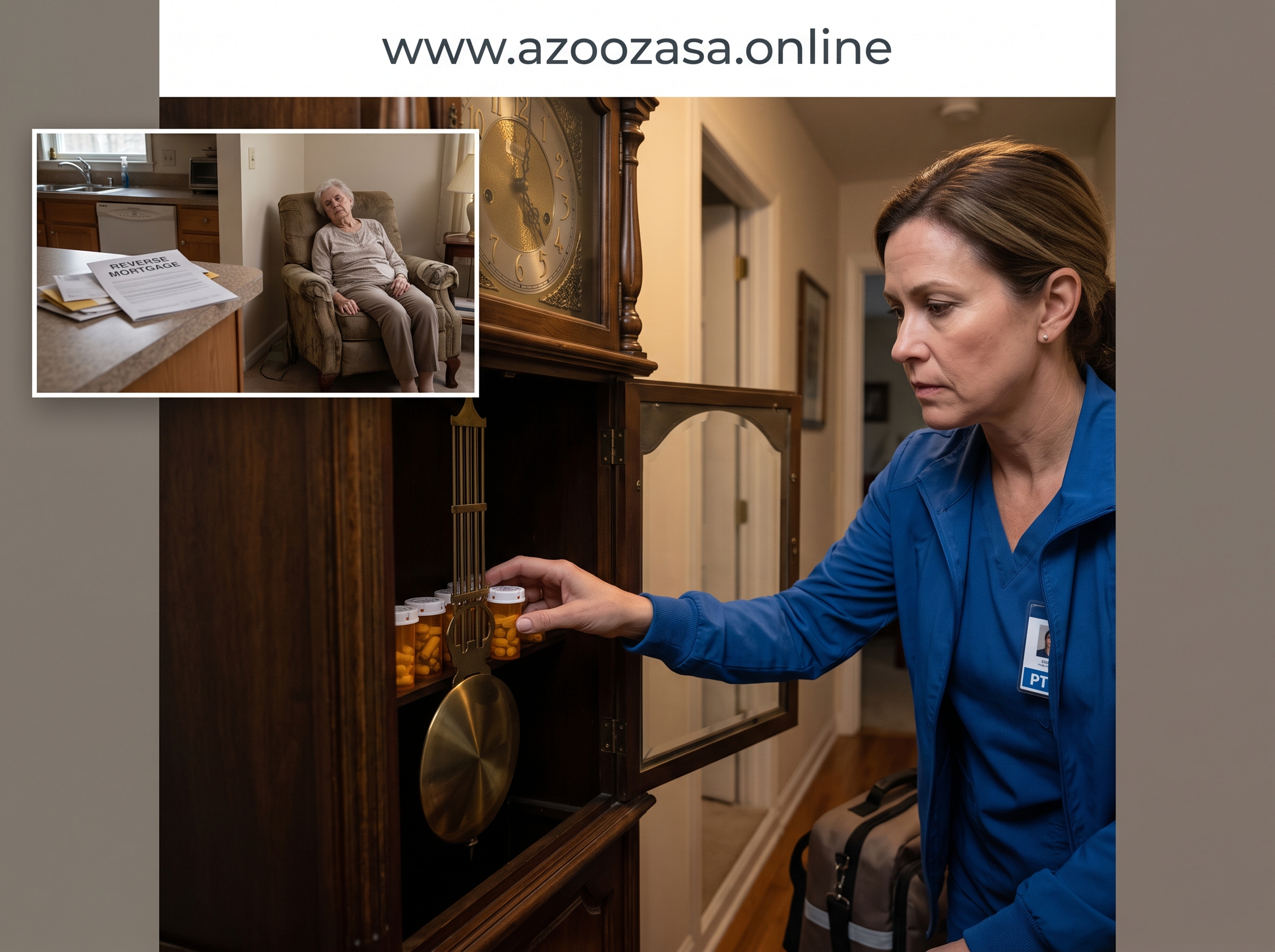
Eighty-two-year-old Vera Miller was swallowed by the faded floral upholstery of her oversized wingback armchair in the center of the dim living room. Just nine months ago, before her “sudden decline,” Vera had been a firecracker of a woman who fiercely guarded her prized hydrangea bushes and walked a mile every morning. Today, her chin rested heavily against her chest. Her skin possessed a translucent, papery quality, and her breathing was a shallow, ragged rattle. When I gently lifted her frail arm to check her radial pulse, her eyes fluttered open, glassy and unfocused, pleading in a language she could no longer physically speak.
“She’s just getting weaker, you know how it is,” Todd said, his voice completely devoid of warmth.
Todd, Vera’s forty-something son, hovered in the archway leading to the kitchen. He was dressed in a crisp, expensive linen shirt and tailored slacks, radiating a sleek, impatient energy that violently clashed with the decaying state of his mother’s home. He checked his heavy silver wristwatch, sighing as if my presence was a tedious interruption to a highly important schedule.
“Natural decline is one thing, Todd,” I replied, keeping my voice carefully neutral as I documented her abysmal pulse rate on my clipboard. “But her muscle tone has completely atrophied in a matter of weeks. She is presenting with severe lethargy and cognitive suppression. Has her primary care physician adjusted her dosages?”
“The doctor said at her age, the body just forgets how to keep going,” Todd waved his hand dismissively. “I make sure she’s comfortable. That’s all we can do.”
He stepped away from the archway to pour himself a glass of sparkling water, leaving my line of sight completely unobstructed into the kitchen.
The countertops were cluttered with unwashed tea cups and expired mail, but sitting squarely in the center of the island, illuminated by the harsh overhead light, was a pristine stack of legal documents. Even from fifteen feet away, my trained eyes could read the bold, capitalized header: REVERSE MORTGAGE AGREEMENT. Next to it lay a bank statement with a circled figure: $220,000. The signature line at the bottom of the top page bore a shaky, jagged scrawl that barely resembled the elegant cursive Vera used to pride herself on.
A cold, heavy knot formed in the pit of my stomach.
The pieces of the past nine months violently snapped together in my mind. Todd moving back home under the guise of being a devoted caregiver. The sudden dismissal of Vera’s weekly house cleaner. The rapid, terrifying deterioration of a woman who had previously managed her hypertension and early-stage neuropathy with meticulous independence. Todd had been cashing her equity, draining the lifeblood of the estate, and keeping her chemically subdued to ensure she couldn’t dial a telephone, flag down a neighbor, or comprehend the financial slaughter happening right under her own roof.
Suddenly, the harsh, electronic marimba of a cell phone ringtone shattered the heavy silence of the house.
Todd pulled a sleek new smartphone from his pocket, his eyes lighting up at the caller ID. “I have to take this. It’s my broker,” he said, already turning toward the front door. “Just finish your little stretches and lock the door on your way out.”
The heavy oak front door clicked shut behind him. Through the sheer living room curtains, I watched him pace the wrap-around porch, laughing brightly into the receiver, entirely unbothered by the ghost fading into the armchair inside.
I dropped my clipboard onto the coffee table. I had perhaps three minutes.
I walked past Vera, giving her shoulder a reassuring squeeze, and stepped into the main hallway. The house was dead quiet, save for the rhythmic, heavy ticking of the antique mahogany grandfather clock standing against the floral wallpaper. I had walked past that clock a dozen times over the last few months, but today, the sound of it caught my attention. It wasn’t the crisp, metallic strike of a well-maintained timepiece. The ticking was muffled, heavy, and labored, as if the internal mechanics were dragging against a foreign weight.
I stepped up to the towering piece of furniture and gripped the small brass handle of the glass door that housed the pendulum and weights. I pulled it open. The smell of aged wood and brass polish drifted out.
The long brass pendulum swung lazily back and forth, but secured to the back of the heavy, hollowed-out pendulum casing with a thick strip of silver duct tape was a tightly bundled plastic grocery bag.
My heart hammered violently against my ribs as I reached inside. I peeled the tape back, catching the plastic bag before it could disrupt the swinging brass. I opened it on the hallway table.
Inside were twelve amber prescription bottles.
None of them had been opened. The safety seals were perfectly intact. There were three months’ worth of Lisinopril for her blood pressure. Four bottles of Donepezil for her neurological clarity. Blood thinners. Potassium supplements. All perfectly lined up, all bearing dates stretching back over the last nine agonizing months. He hadn’t just been neglecting her; he had been orchestrating a slow, methodical execution by omission.
Folded neatly beneath the plastic bottles was a single sheet of heavy legal paper. I unfolded it with trembling hands. It was a power of attorney and property transfer directive, legally signing over the deed of the house entirely to Todd, bypassing his sister in Seattle completely. It was dated for tomorrow.
The sheer, calculated evil of it stole the breath from my lungs. I looked back into the living room at the frail, suffering woman who had been left to quietly drown in her own failing body so her son could buy a boat and a new wardrobe.
Professional protocol dictated that I call Adult Protective Services from my car and file a report. But protocol would take days. Protocol would involve Todd hiring a slick lawyer with Vera’s own money. Protocol would give him time to hide the bottles, destroy the paperwork, and perhaps ensure his mother didn’t survive the weekend to testify.
I didn’t have time for protocol.
I unzipped my heavy, black canvas medical bag. I swept all twelve unopened prescription bottles into the deep side pocket. I folded the property transfer directive and slipped it behind my patient assessment charts. I zipped the bag shut with a sharp, decisive metallic rasp that echoed in the quiet hallway.
I walked back into the living room, slung the heavy medical bag over my shoulder, and looked at Vera. Her glassy eyes met mine.
“Hold on, Vera,” I whispered fiercely. “Just hold on for ten more minutes.”
I turned on my heel, walked to the front door, and stepped out onto the sun-drenched wrap-around porch.
Todd was leaning against the wooden railing, the phone pressed to his ear, staring out at the manicured lawn he had paid for with his mother’s stolen equity. “Yeah, wire the deposit by Friday,” he was saying, a smug grin playing on his lips. “The funds are liquid. It’s a done deal. I’ll call you back.”
He lowered the phone and turned to face me, his grin faltering slightly at the cold, unyielding expression on my face.
“All done stretching?” he asked condescendingly.
“I’m suspending physical therapy, Todd,” I said, my voice echoing clearly in the quiet suburban air.
He rolled his eyes and crossed his arms over his expensive linen shirt. “Fine. If you think it’s pointless, don’t come back. I’ll find a therapist who actually wants to do their job and make her comfortable.”
“I am doing my job,” I replied, taking a step toward him. “But physical therapy won’t do much good for a patient suffering from induced hypertensive crisis and severe neurological withdrawal due to nine months of systemic medication deprivation.”
Todd’s arrogant posture instantly shattered. The color drained from his face, leaving a sickly, pale chalkiness behind. His eyes darted toward the front door, then back to my heavy canvas bag.
“I… I don’t know what you’re talking about,” he stammered, his voice suddenly hollow and thin. “She takes her pills every morning. I give them to her myself.”
“No, you don’t,” I said, my tone absolute and unwavering. “You hide them. Specifically, you hide them in a plastic bag taped to the inside of the grandfather clock in the hallway, right next to the fraudulent property transfer directive you forced a heavily medicated woman to sign.”
Todd stepped backward, his heel hitting the wooden porch railing. The slick, confident broker vanished, entirely replaced by a cornered, terrified coward. He looked at my black bag.
“Give me that bag,” he demanded, his voice trembling with a sudden, desperate panic. He took a step toward me, raising his hands. “You have no right to snoop through my house. You’re just a therapist. Give me the bag, or I swear to God—”
“Or you’ll what, Todd?” I cut him off, my voice dropping to a dangerous, icy register. “You’ll hurt me? You’ll lock me in the house? You’re a little late for damage control.”
I reached into my pocket and pulled out my cell phone. The screen was still illuminated, displaying an active, ongoing call that had been running for the last four minutes.
“I didn’t call Adult Protective Services, Todd,” I told him, holding the phone up so he could see the numbers. “I called the county sheriff’s department while you were on the phone with your broker. The dispatcher has heard every word we just said. They are currently pulling into your subdivision.”
Right on cue, the faint, undeniable wail of a police siren pierced the quiet afternoon air, growing rapidly louder as it echoed down the oak-lined street.
Todd looked toward the sound, his jaw trembling violently. He looked at the driveway, then at the street, realizing with absolute certainty that there was nowhere to run. The heavy, gilded cage he had built out of his mother’s suffering was rapidly collapsing in on him.
“You can wait here on the porch for the deputies,” I told him, stepping past his frozen, defeated form and pulling the front door open once more. “I’m going back inside to sit with my patient. And for the first time in nine months, she is going to get exactly what she deserves.”


0 comments