
The Phantom Miles
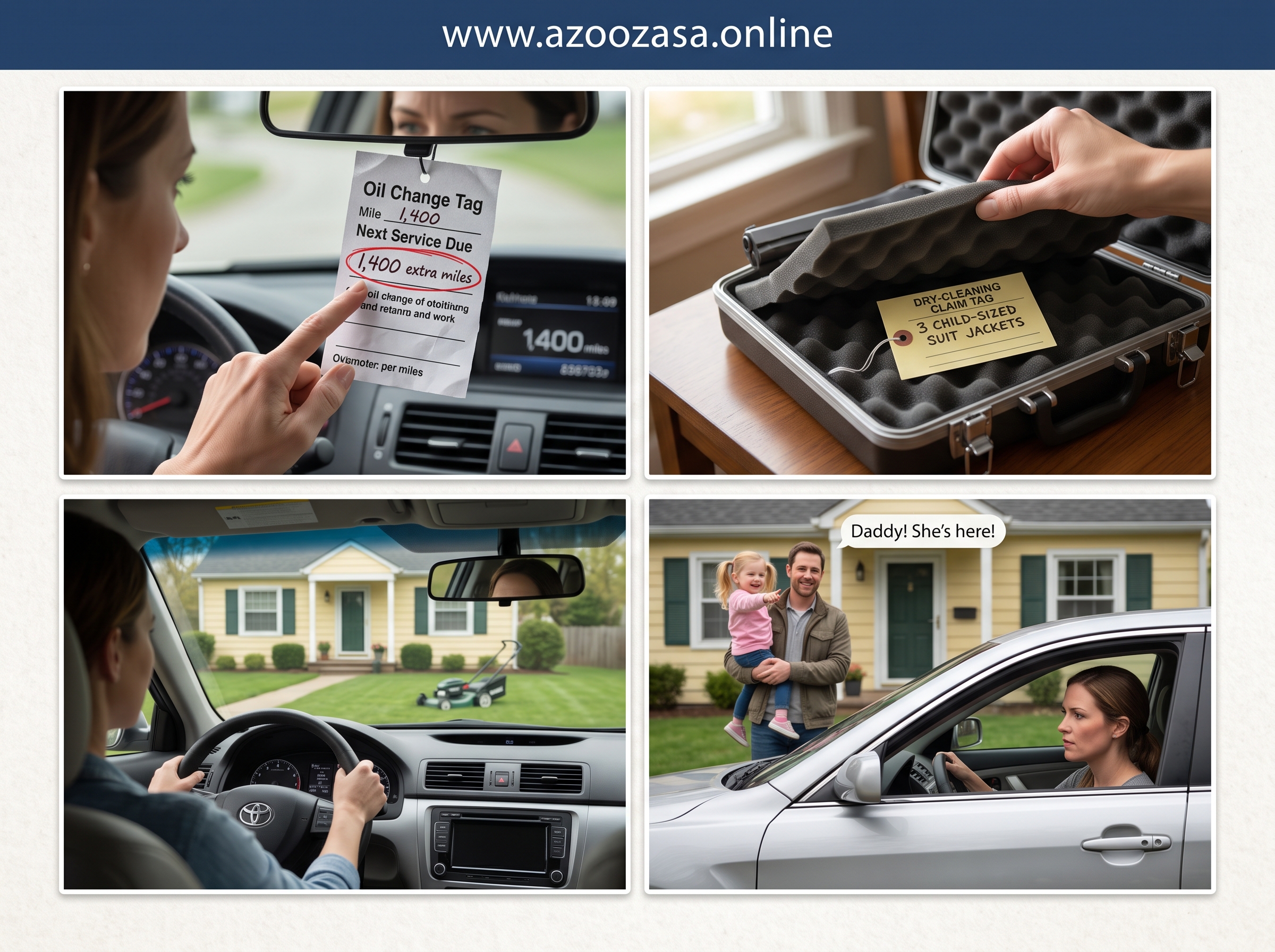
The transparent plastic of the windshield oil-change sticker caught the harsh afternoon light, glaring at me like a silent, inescapable accusation. Fourteen hundred extra miles. I sat perfectly still in the driver’s seat of Mark’s heavy-duty truck, my fingers gripping the leather steering wheel as my mind performed the agonizing arithmetic of betrayal.
Mark worked as an actuary at a corporate firm exactly three miles down the interstate. Six miles round trip, five days a week. Even factoring in his occasional weekend hardware store runs or picking up takeout, the numbers on the odometer were an impossible, glaring anomaly. Vehicles do not conjure fourteen hundred miles out of thin air.
For six years, the explanation had been simple and unquestioned: the Wisconsin hunting trips. Every third weekend, rain or shine, frost or thaw, Mark packed his heavy camouflage duffel bag, kissed my forehead, and drove north to a rustic cabin he claimed he co-leased with three old friends from his college fraternity. He always returned on Sunday evening, smelling of woodsmoke and stale beer, carrying a cooler of venison sausage that he insisted came from the local butcher because they “never had any luck in the brush.” I had never pushed it. I was a trusting wife, deeply comfortable in the predictable, quiet rhythm of our childless, stable marriage.
Until Tuesday.
I had decided to surprise him by deep-cleaning his home office, a space I usually left to his own chaotic filing system. It was a tedious chore, dusting the heavy mahogany bookshelves and organizing the stray mail that cluttered his desk. When I reached the shadowed corner where he kept his heavy, combination-locked gun case, I noticed it wasn’t fully secured. The heavy steel latch hung open by a fraction of an inch—an incredibly uncharacteristic mistake for a man who prided himself on meticulous safety.
I pulled the heavy metal door open just to check the humidity packet inside, expecting to see his prized hunting rifles. The familiar, metallic scent of gun oil and cold brass washed over me. But the racks were completely empty.
My brow furrowed. I ran my hand along the bottom of the case, feeling the dense, charcoal-colored foam padding. It felt uneven, slightly raised in the back corner. I pressed down, and the edge of the stiff foam lifted easily. Beneath it lay a shallow, hollowed-out compartment, meant for storing spare ammunition or cleaning kits.
It didn’t hold bullets. It held a crumpled, pale blue slip of paper.
I pulled it out, my fingers trembling slightly in the quiet air of the study. It was a dry-cleaning claim tag from a place called “Main Street Cleaners,” located in a town named Oak Creek—nearly three hours south, in the exact opposite direction of the Wisconsin border. The itemized list printed on the faded receipt hit me with the blunt force of a physical blow.
3x Child-size suit jackets (Navy).
1x Child-size dress (White).
My heart hammered against my ribs, a frantic, warning rhythm that echoed loudly in my own ears. Child-size suit jackets. A child-size dress. My husband didn’t have nephews. He didn’t have godchildren. And he certainly didn’t have a reason to hide a mundane dry-cleaning receipt beneath the false bottom of a gunless gun case.
I didn’t say a word. I didn’t scream, and I didn’t cry. A strange, glacial calm settled over me, freezing the initial panic and replacing it with a terrifying, absolute clarity. I folded the blue receipt and slipped it deep into the pocket of my jeans.
I walked into our master bedroom and pulled a small canvas overnight bag from the top shelf of the closet. I packed exactly three days’ worth of clothes, my toiletries, and the heavy envelope of emergency cash we kept hidden behind the winter coats. I walked out to the driveway, climbed into my Toyota Camry, and locked the doors. I programmed the Oak Creek address from the receipt into my GPS, put the car in drive, and left my entire life behind without leaving a single note on the kitchen counter.
The three-hour drive was a masterclass in psychological torture. The highway lines blurred into a hypnotic, monotonous stream as I played back six years of our marriage. The unanswered phone calls on Saturday nights. The hushed, urgent tones when he answered his cell phone in the garage. The way his eyes would sometimes glaze over during our quiet anniversary dinners, looking straight through me, his mind clearly anchored in a completely different world. The fourteen hundred miles on the oil change tag weren’t just a number; they were the physical distance of his deception, the asphalt road connecting his manufactured reality with the lie I had been living.
By the time I reached Oak Creek, the sun was beginning to dip below the horizon, casting long, golden shadows across the unfamiliar streets. The GPS led me away from the commercial district, guiding me into a quiet, working-class suburban neighborhood lined with mature oak trees and modest, mid-century homes.
“You have reached your destination,” the automated voice announced with cruel cheerfulness.
I pulled over to the curb and cut the engine.
Directly across the street sat a small, pale yellow house with crisp white trim. It was charming, lived-in, and immaculately maintained. A red plastic tricycle lay abandoned on the front concrete walkway. A push lawn mower sat in the side yard, abandoned halfway through a freshly cut patch of bright green grass.
I sat in the heavy silence of my car, my hands gripping the steering wheel so tightly my knuckles ached. I told myself to turn the key. I told myself to drive away, to call a divorce lawyer from a nameless motel room, and spare myself the horrific indignity of witnessing the truth with my own eyes. But the raging fire burning in my chest demanded a face. It demanded an ending.
Just as I reached for the door handle, the front door of the yellow house swung open.
The breath left my lungs in a violent, sudden rush.
It was Mark.
He was wearing a faded gray t-shirt and worn denim shorts—clothes I had never seen him wear, clothes that belonged to a different man entirely. He looked relaxed. He looked entirely at home. But it wasn’t his casual attire that sent a shockwave of pure electricity down my spine.
He was carrying a little girl.
She looked to be about four years old, wearing a bright pink tutu over denim overalls, her dark hair pulled back into two messy pigtails. She was laughing hysterically, her small arms wrapped tightly around Mark’s neck, her face buried affectionately in his shoulder.
“Daddy!” the little girl yelled, her voice carrying clear and bright across the quiet suburban street. “Daddy, the boys are putting mud on their new suits! Mommy is going to be so mad for the wedding!”
Mark threw his head back and laughed—a deep, genuine, echoing laugh that I hadn’t heard in our sterile house in years. “Let them get muddy, bug,” he said, shifting her weight effortlessly on his hip. “We’ll take them to the cleaners again. It’s our little secret.”
Three little boys in navy suits. One little girl in a white dress. Four children. Four children and a mother, living a completely separate, vibrant life three hours away from the quiet house where I had spent six years waiting for him to come back from the woods. The fourteen hundred miles weren’t just a commute; they were the tether between two entirely different families.
I didn’t step out of the car. I didn’t need to scream on his front lawn or demand an explanation that would only be constructed of more pathetic lies. The truth was standing on the concrete walkway, completely illuminated by the setting summer sun.
I slowly reached over and rolled down the passenger-side window. The faint mechanical hum of the glass descending caught his attention in the quiet neighborhood.
Mark turned his head, his warm smile still plastered across his face. He looked toward the street, his eyes scanning the unfamiliar sedan parked on the curb. And then, he saw me.
I watched the color drain from his face in a matter of seconds. The easy, relaxed posture vanished instantly, replaced by a rigid, terrified paralysis. He froze on the walkway, clutching the little girl tightly to his chest, his eyes wide and unblinking, staring straight into mine across the thirty feet of asphalt that separated our worlds.
I didn’t break eye contact. I let him see the absolute death of our marriage written in my expression. I let him feel the crushing, suffocating weight of the dual life he had built suddenly collapsing in on itself.
For ten agonizing seconds, the street was dead silent. He opened his mouth, but no sound came out. He was trapped, caught halfway between the ghost of the wife he had abandoned and the reality of the daughter he was holding, unable to move in either direction.
I raised my hand, pulled the blue dry-cleaning receipt from my pocket, and held it up to the open window for just a moment. I watched his jaw drop. I watched the profound realization hit him that he hadn’t just been caught; he had been completely unravelled.
Then, I let the piece of paper flutter from my fingers. It danced on the evening breeze, floating away from the car and landing softly in the gutter.
I rolled the window back up, turning my face away from the pale yellow house, the lawn mower, and the absolute stranger who possessed my husband’s face. I turned the ignition. The Camry hummed to life, a steady, reliable sound that broke the paralyzing silence of the neighborhood. I put the car in drive and pulled smoothly away from the curb, leaving him standing on the walkway in the absolute wreckage of his own making.
I didn’t look in the rearview mirror as I navigated back toward the highway. I didn’t need to see the ashes of the life I was leaving behind. I had fourteen hundred miles of my own to reclaim, and for the first time in six years, the road ahead belonged entirely to me.


0 comments