
The $9,200 Secret of Silver Oaks
My mother, Evelyn, was a force of nature. Even at eighty-five, she ran her local garden club with an iron fist, baked fiercely competitive pies for the county fair, and completed the Sunday crosswords in pen before I even finished my morning coffee. So, when she tripped over a coiled garden hose and fractured her left patella, the doctor’s recommendation felt like a minor speed bump. He suggested a brief, two-week stint at Silver Oaks Rehabilitation Center for specialized physical therapy. “A luxury hotel with nurses,” the glossy brochure promised, featuring smiling seniors playing chess in sunlit courtyards.
The facility was undeniably pristine, boasting sparkling glass chandeliers in the lobby, a grand piano that played itself, and the persistent, sterile scent of industrial lemon cleaner. It looked like the perfect place to heal. But within fourteen days, the vibrant, sharp-tongued woman who had raised me was reduced to a fragile, bedridden shell.
Her skin took on a pale, translucent quality. Her speech, once quick and witty, devolved into a thick, unintelligible slur. She stopped asking for her crossword puzzles. She stopped asking about her garden. She mostly just stared at the ceiling, her eyes clouded and unfocused, her breathing shallow and labored.
When I cornered Arthur Vance, the facility’s impeccably dressed administrator, his perfectly capped smile never reached his cold, calculating eyes.
“It’s just natural age progression,” he assured me, patting my shoulder with a practiced, deeply patronizing sympathy. “The trauma of a fall, the change in environment… it often accelerates underlying cognitive decline in patients her age. We see it all the time, unfortunately. The best thing we can do is keep her comfortable here.”
I felt sick in my chest. A heavy, suffocating intuition told me he was lying, but I had no medical degree to hurl at his smug face. I only had the terrifying reality of my mother slipping away in a bed with crisp white sheets.
I refused to accept it. I visited every single afternoon, determined to anchor her to reality. To bring some color and warmth into her stark room, I brought her favorite treats—soft lemon drops, fresh macarons, and warm pastries—tucked into small, colorful paper gift bags. I’d sit by her bed for hours, reading aloud, holding her limp hand, and praying for a spark of recognition.
Yesterday afternoon, the air in Room 214 felt particularly heavy and still. Mom was deeply asleep, unresponsive to my voice. Anxious and needing something to do with my hands, I decided to clear the accumulated clutter from her bedside table. There were a few untouched magazines, a stack of plastic water cups, and three of the paper gift bags I had brought earlier in the week.
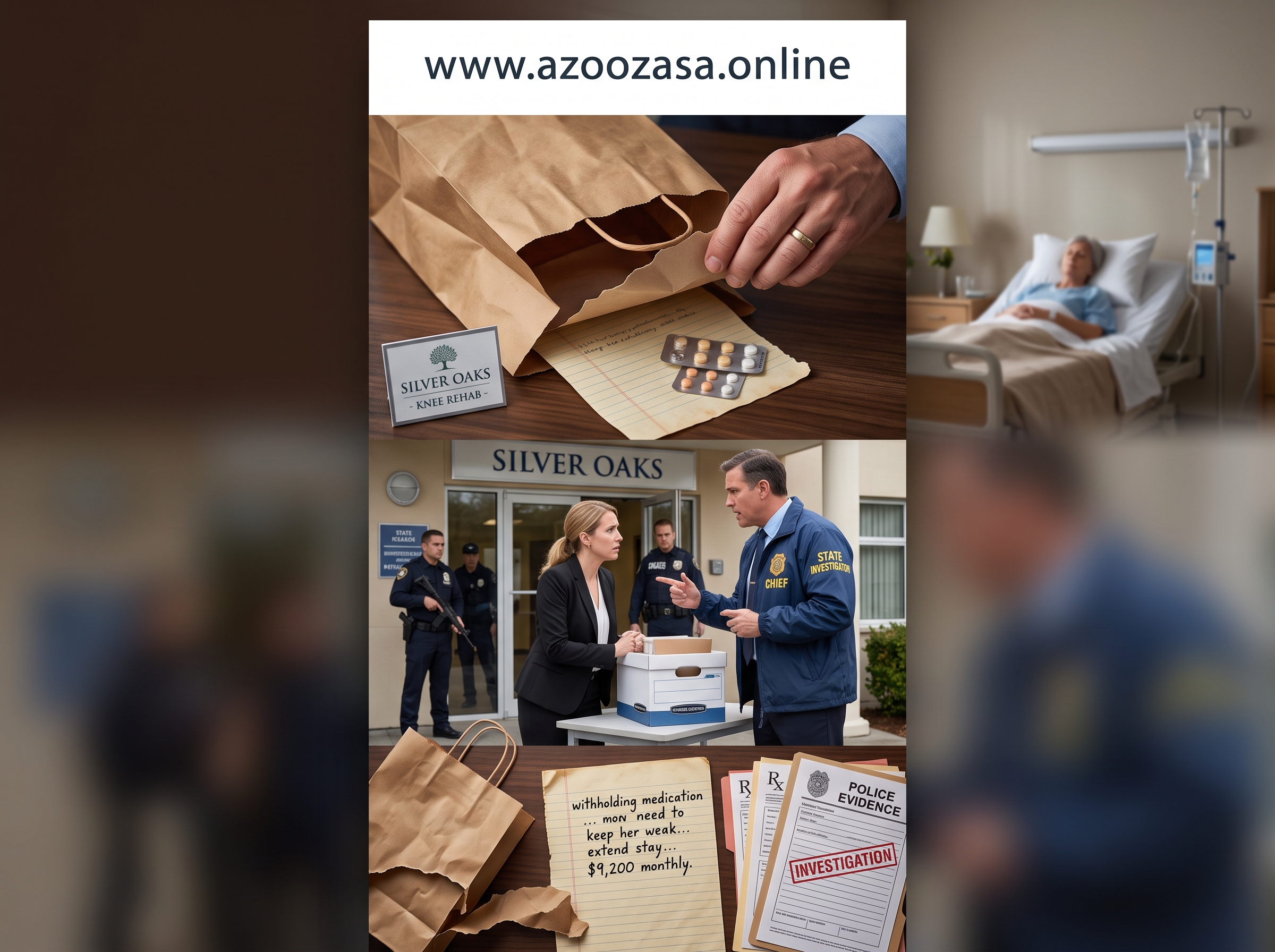
As I gathered the bags, the bottom corner of a blue floral bag snagged on the sharp metal edge of her bedside tray. I pulled, and the thick paper liner ripped open with a sharp tear.
I went to toss it in the trash when something caught my eye. A folded piece of yellow, lined paper had been wedged tightly beneath the cardboard reinforcement at the bottom of the bag. It fluttered down, landing silently on the linoleum floor.
I picked it up, my brow furrowing in confusion. It wasn’t a receipt. It was a handwritten note, penned in frantic, cramped cursive.
To Evelyn’s daughter, it began.
The words that followed burned themselves into my retinas, turning the blood in my veins to ice. The note was from Maria, a young, quiet nurse aide who had suddenly and inexplicably “resigned” three days prior. The letter detailed specific dates, times, and medication lot numbers. It explicitly outlined a horrifying protocol: under direct orders from administration, the head nurse, Brenda Hayes, was intentionally withholding Mom’s vital blood pressure medication, Lisinopril. Worse, they were crushing mild, unprescribed sedatives into her evening applesauce.
They do this to the self-pay and high-tier insurance patients, Maria wrote, her pen pressing so hard it had nearly torn the paper. They keep them weak, docile, and confused. If she recovers and passes physical therapy, she goes home. If she stays bedridden, it’s $9,200 every single month for the facility. Please. Get her out. They are killing her for the beds.
I didn’t scream. I didn’t cry. The sick feeling in my chest evaporated, replaced instantly by a glacial, terrifying calm. I folded the note, slipped it deep into my coat pocket, and looked at my mother’s sleeping face. I kissed her forehead, promising her silently that this nightmare was over.
I walked out of the room, my steps measured and deliberate. I nodded politely to the nursing station, smiled thinly at the receptionist, and walked out the automatic glass doors.
I drove straight to the local police precinct. The desk sergeant looked ready to dismiss me as a hysterical, grieving daughter right up until I laid the yellow paper on his desk. When a detective finally sat down with me, his initial skepticism vanished as he read the specific medical codes, the names, and the administrative lockbox combinations Maria had bravely provided. The sheer mechanical detail of the confession elevated it from a wild accusation to actionable evidence of a massive, organized criminal enterprise.
This morning, the pristine, luxurious illusion of Silver Oaks was violently shattered.
I stood across the street, gripping a cup of terrible diner coffee, watching the flashing red and blue lights of half a dozen state police cruisers and three unmarked sedans belonging to the Department of Health and Human Services barricade the entrance. I followed them inside.
The lobby was a scene of controlled chaos. State investigators in windbreakers swarmed the facility like a hive of angry hornets. Flustered nurses were being separated and interviewed in the dining hall. Detectives were already wheeling out heavy filing cabinets, their walkie-talkies buzzing with static. Through the glass walls of the administrative wing, I saw them pulling the central servers directly from the walls.
Arthur Vance stood in the center of the grand lobby, his impeccable suit suddenly looking entirely too large for him. His face was the color of wet ash. The head nurse, Brenda, was already in handcuffs near the elevator bank, weeping hysterically, her mascara running down her face as she loudly tried to blame Vance for the orders.
The chief investigator, a tall, imposing woman with steel-gray hair and eyes like chipped flint, walked purposefully across the marble floor. She held a thick, leather-bound ledger in her hands—a book they had just cracked out of the hidden floor safe Maria had mentioned in her note.
The lobby fell deathly silent, the only sound the distant, oblivious melody of the self-playing grand piano. The chief investigator stopped inches from Vance. She didn’t shout. She didn’t need to. Her voice echoed off the vaulted ceiling with a terrifying clarity.
“Arthur Vance,” she announced, her tone sharp enough to cut glass. “You are under arrest for elder abuse, grand larceny, and conspiracy to commit medical fraud. But more importantly, we just found your private ‘extended stay’ incentive logs.” She held up the heavy ledger, letting the weight of the evidence hang in the air. “You’ve been dosing these patients to the brink of organ failure just to keep the billing cycle running. You aren’t looking at fraud anymore, Arthur. You’re looking at twenty counts of attempted murder.”
Vance’s knees buckled. Two state troopers caught him by the arms, dragging him forward to read him his rights as they locked the heavy steel cuffs around his wrists. He looked up, his panicked eyes scanning the room until they landed on me. I didn’t look away. I stared back at him with the fierce, unwavering fury of a daughter who had just saved her mother’s life.
Within the hour, an ambulance transferred Mom to the county hospital. The doctors immediately began flushing the unprescribed sedatives from her system and reinstated her proper blood pressure medication. The transformation was miraculous. Within three days, the terrifying fog lifted. The slurring stopped. By the end of the week, she was sitting up in bed, demanding a pen and the Sunday newspaper, loudly criticizing the hospital’s gelatin desserts.
The sharp, witty woman I knew had returned to me.
We all just want one more year, one more holiday, one more Sunday afternoon with the people we love. Vance and his syndicate had tried to steal that from dozens of families, trading human lives for a monthly check, assuming the vulnerability of age would be their perfect cover. But they underestimated the power of a guilty conscience, the hidden strength of a paper gift bag, and a daughter’s absolute refusal to let her mother fade into the dark.


0 comments