
📋 Table of Contents
The $12,000 Secret: The Twin Across the Neighborhood
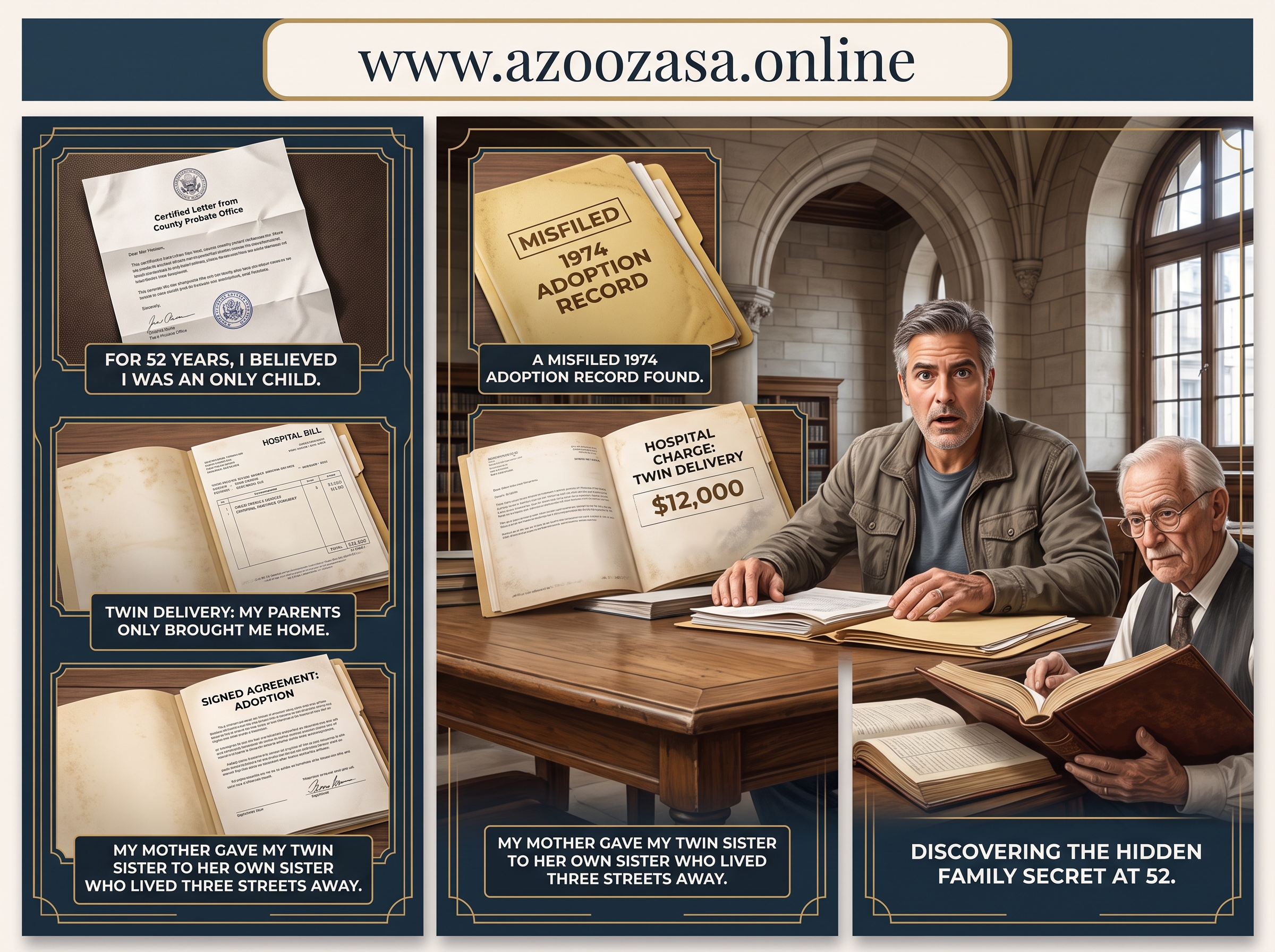
The musty air of the county courthouse vault seemed to freeze in my lungs. I stared at the yellowed 1974 adoption record, the frantic pounding of my heart echoing in my ears.
The archivist opened the heavy leather-bound ledger, ran a white-gloved finger down the faded column of blue ink, and said, “According to the secondary addendum, the infant was formally discharged into the custody of Eleanor and Thomas Vance. The child was registered under the name… Maya Vance.”
My breath hitched. Maya.
My cousin Maya.
The Illusion of Cousinhood
I grabbed the edge of the metal viewing table to steady myself. The archivist looked at me with a practiced, sympathetic patience, but he couldn’t possibly understand the tectonic plates shifting beneath my fifty-two years of existence.
Maya and I had grown up exactly three streets apart in our quiet Ohio suburb. We were inseparable, a two-girl gang riding bicycles with banana seats, scraping our knees on the same sidewalks, and whispering secrets through homemade tin-can telephones. Whenever anyone pointed out our uncanny resemblance—the identical hazel eyes, the shared constellation of freckles across our noses, the exact same wave in our auburn hair—my mother would simply wave a hand and dismiss it.
“Oh, the Vance family genes are just stubbornly strong,” she would laugh, handing us identical popsicles.
I spend my days mapping out complex narratives. Through my work creating digital media content and story graphics for my website, www.azoozasa.online, I have spent years developing fictional plots focused on suspense, family drama, and mystery. I thought I knew how to spot a plot twist. I craft them for a living. Yet, the most profound, suspenseful family drama of my life had been orchestrated by my own mother, hiding in plain sight half a century ago.
We were never cousins. The $12,000 hospital bill for a twin delivery wasn’t a clerical error. Maya was my twin sister, sold or given to my barren Aunt Eleanor, raised a mere three streets away, while we were both force-fed a lie of singular existence.
The Confrontation in the Conservatory
I left the courthouse in a blur, my hands gripping the steering wheel of my sedan until my knuckles turned white. I didn’t drive home. I merged onto the highway, heading toward the affluent American retirement community where my mother now lived.
At eighty-two, my mother resided in a premium senior care facility outside Columbus. I had spent considerable time studying the lifestyle habits of retirees in the United States—how they navigate their leisure time, the transition into assisted living, and the daily routines that define their twilight years. The facility was a testament to modern American aging, designed to feel less like a hospital and more like a luxury resort.
I found her in the sunlit conservatory. She was fresh from her morning water aerobics—a daily exercise routine she swore by—and was sitting at a glass patio table. In front of her sat a meticulous breakfast designed around the nutritional benefits of whole foods: a bowl of steel-cut oats topped with walnuts and fresh blueberries, green tea steaming gently in the air-conditioned room.
She looked up, her face breaking into a wide, genuinely delighted smile. “Well, what a lovely surprise! I thought you were working on a new digital project today.”
I didn’t sit down. I reached into my tote bag, pulled out the photocopied file the archivist had given me, and placed it directly over her bowl of oats.
“I was at the county probate office this morning,” I said, my voice eerily calm. “An audit uncovered a misfiled adoption record from 1974. Under your maiden name.”
My mother froze. The silver spoon in her hand clattered against the glass table. For a fleeting second, the sweet, elderly woman vanished, replaced by the cornered, desperate expression of a ghost who had just been caught haunting the living.
“Where did you get this?” she whispered, her voice stripped of its usual warmth.
“The county,” I replied. “You charged $12,000 for a twin delivery. You brought me home. Aunt Eleanor brought Maya home. Why?”
The Anatomy of a Lie
My mother slumped back into her wicker chair, suddenly looking every single day of her eighty-two years. She looked out the window at the manicured lawns, where other retirees were leisurely playing croquet in the morning sun, oblivious to the emotional hurricane ripping through the conservatory.
“It was 1974,” she began, her voice trembling but resolute. “Your father had just lost his job at the steel mill. We were drowning in debt. And then, the ultrasound showed twins. I panicked. We couldn’t afford to feed one baby, let alone two.”
She turned back to me, her eyes pleading. “Eleanor had suffered four miscarriages. She was broken, depressed, and her marriage to Thomas was collapsing under the weight of their empty nursery. Thomas had money. He offered to pay our entire hospital bill, clear your father’s debts, and give one of you the life we couldn’t.”
“So you just gave her away?” I asked, the betrayal tasting like copper in my mouth. “You sold my sister to settle a debt?”
“We didn’t sell her!” my mother snapped, a spark of maternal defensiveness flaring. “It was an adoption. A private, closed arrangement. We thought we were doing the most loving thing possible. Eleanor got her baby. We kept you. And we stayed three streets away so you would never truly be separated. You grew up together. You had a wonderful childhood. Does the label of ‘cousin’ versus ‘sister’ really undo all those happy years?”
“It undoes the truth,” I said, my voice finally breaking. “It means my entire identity, Maya’s entire identity, was built on a foundation of omissions. You denied us the right to know who we really are to each other.”
Two Halves Restored
I didn’t stay for the rest of her justifications. The air in the facility felt suddenly oppressive. I left the conservatory, walked out to the parking lot, and sat in my car.
I pulled out my phone. My thumb hovered over Maya’s contact icon. We texted daily, a relentless stream of shared memes, recipe ideas, and complaints about our respective knees aching when the weather turned cold. I pressed call.
She answered on the second ring, her voice bright and familiar. “Hey! I was just about to send you a link to this new story layout I saw. What’s up?”
“Maya,” I said, my voice thick with unshed tears. “Are you sitting down?”
“I am now. You’re scaring me. What’s wrong?”
“I need to come over,” I said, staring at the stark white adoption papers sitting on my passenger seat. “There’s something I need to show you. Something about us. We aren’t cousins, Maya. We never were.”
There was a long, heavy silence on the other end of the line. When she finally spoke, her voice lacked the shock I had expected. Instead, it carried the quiet, trembling weight of a lifelong suspicion finally being validated.
“I’ll put the kettle on,” she whispered. “Drive safe, sister.”
I put the car in gear and pulled out of the parking lot. For fifty-two years, I had walked through life feeling like a character in a story written by someone else. Now, as I drove toward the house three streets over from our childhood home, I finally had the pen in my own hand. The family drama had reached its climax, but the true story of our lives was just beginning.
If you discovered a family secret of this magnitude, would you confront the older generation for closure, or focus solely on rebuilding the relationship with the sibling you never knew you had?

0 comments