
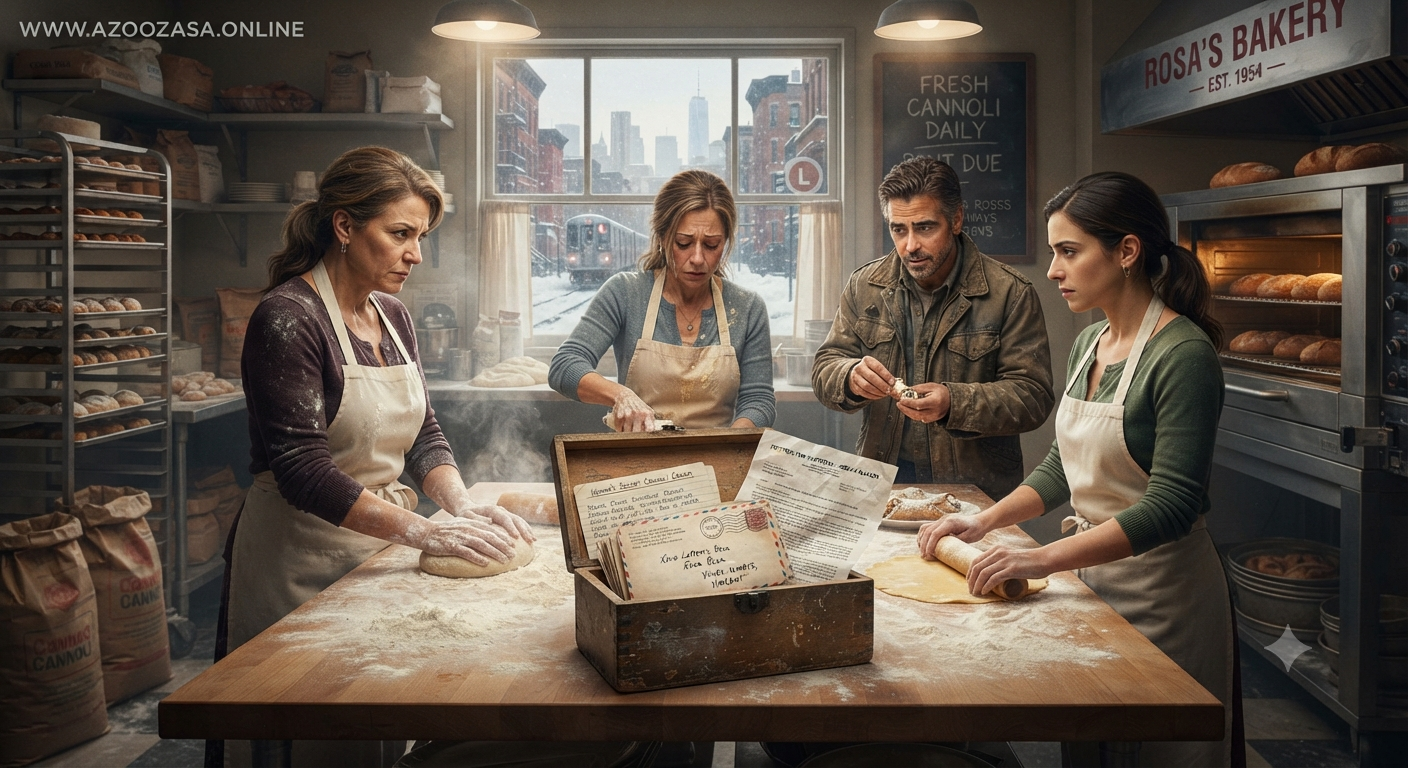
### The Recipe Box
The aroma of roasted hazelnuts, warm butter, and dark cocoa had been the oxygen of Carroll Gardens for over half a century. At *Rosa’s Pasticceria*, the flour dust never truly settled, settling instead like a fine winter frost over the vintage marble counters and brass-trimmed display cases. But on a rainy Tuesday morning in Brooklyn, the ovens were cold.
Beloved matriarch Rosa DeLuca had passed away at eighty-four, leaving behind a legacy carved out of powdered sugar and sheer grit—and a gaping void that her three estranged daughters were entirely unequipped to fill.
Elena, the eldest at fifty-two, stood with her arms crossed near the front window, clutching a clipboard filled with profit-loss statements that painted a terrifying picture of rising rents and suffocating back taxes.
Gia, the middle sister and a sharp corporate attorney from Manhattan, paced the checkerboard floor in designer heels, tapping her phone impatiently. And Mia, the youngest at twenty-eight, sat on a wooden stool near the dough tables, staring blindly at the brass-bound wooden recipe box resting between them.
“The lease renewal went up forty percent,” Elena said, her voice tight with exhaustion. “If we don’t clear fifty thousand by next month, the bank forecloses. The bakery goes to a developer, and Rosa’s name becomes a high-end juice bar.”
“We sell the secret cannoli and sfogliatelle formulas to the distribution syndicate in Queens,” Gia countered instantly, her pragmatism overriding sentiment. “A silent partnership. We walk away solvent, and we divide whatever is left.”
“Sell Mom’s recipes?” Mia gasped, her eyes flashing with betrayal. “Those formulas are her soul! We promised we’d keep the bakery running.”
“Keeping the bakery running requires cash we don’t have, Mia,” Gia snapped back.
Desperate to find a hidden bank account or a financial loophole, Elena reached out and undid the tarnished brass clasp of Rosa’s legendary recipe box. The lid lifted with a soft, familiar creek.
Inside, tucked beneath decades of index cards stained with vanilla and lemon zest, lay not just pastry secrets, but a bundle of faded, powder-blue envelopes tied with a silk ribbon.
Elena pulled the top letter out, unfolding the heavy stationery. The date stamp read October 1984. The handwriting was smooth, elegant, and unmistakably their mother’s. But the name addressed at the top wasn’t their father’s.
*“My dearest Vincent,”* Elena read aloud, her voice trembling as the words turned to ash in her mouth. *“Every mile between Brooklyn and Chicago feels like an ocean. Until I can hold you and our sweet boy again, these letters will have to be my heart.”*
Gia snatched the letter from Elena’s hand, her eyes scanning the frantic ink. The letters revealed an entirely secret life—a parallel family in Chicago, a second love, and a son born two years after Mia. Rosa hadn’t just been a devoted Brooklyn baker; she had lived a double life, splitting her heart between two worlds.
Before the three sisters could even begin to process the seismic shock of the discovery, the front bell of the pasticceria chimed.
The door pushed open, letting in a gust of wet wind and a tall, broad-shouldered man in his late twenties. He wore a heavy canvas jacket, carried a battered leather duffel bag, and had dark, expressive eyes that looked startlingly familiar when they caught the light of the chandelier.
He didn’t look like a customer. He looked like an heir.
“I’m looking for Elena, Gia, and Mia,” the stranger said, his voice carrying a distinct midwestern cadence softened by a slight Italian lilt. “My name is Dominic Rossi. From Chicago. And based on the certified deed and letters my mother left me… I own half of this bakery.”
—
The confrontation that followed inside the empty bakery kitchen was nothing short of explosive.
Gia threatened an immediate restraining order and a battery of interstate inheritance lawsuits, while Elena argued that Dominic was a stranger trying to exploit their grief. Only Mia stood silent, watching the young man set down his duffel bag and look around the industrial kitchen with a quiet, reverent awe.
“I didn’t come here to tear this place down,” Dominic said, holding up his hands defensively as Gia waved a legal brief in his face. “My mother passed away three months ago. Before she went, she gave me that box of letters and told me the only family I had left was out here in Brooklyn. She loved this bakery, and she loved Rosa. I’m not here to steal your legacy. I’m here because I didn’t have anywhere else to go.”
The reality of the situation settled over them like a heavy fog. Legally, Dominic was right. Rosa’s final, unfiled amendment to her will—discovered tucked in the bottom of the box—bequeathed fifty percent of the business to her “beloved son, Dominic.”
With bankruptcy looming in thirty days and the landlord breathing down their necks, the sisters didn’t have the luxury of a multi-year court battle. If they wanted to save *Rosa’s Pasticceria*, they had to do the impossible: work alongside the brother they never knew existed.
—
The first week was a disaster of flour, fury, and bruised egos.
Elena’s traditional management style clashed with Gia’s corporate spreadsheets, while Dominic tried to introduce modern inventory software that Mia refused to touch. Tempers flared over broken mixing bowls and conflicting baking schedules.
One night, at 3:00 AM, the kitchen was dead silent except for the hum of the proofer. Dominic stood alone at the marble slab, desperately trying to recreate Rosa’s legendary brioche dough. He added the yeast, but the texture was heavy, dense as wet cement.
A shadow fell across the counter. Mia walked in, wearing an oversized hoodie and holding a cup of black coffee. She didn’t say a word. She simply stepped beside him, reached into the flour bin, adjusted the ratio of semolina to bread flour, and gently guided his hands into the proper folding motion.
“You’re beating it too hard,” Mia murmured softly, her hostility finally melting away. “Mom always said you have to coax the gluten out, never force it. It’s like dealing with us.”
Dominic let out a tired, self-deprecating laugh. “I didn’t ask for any of this, you know. Growing up in Chicago, hearing stories about the magical bakery in New York… I always felt like a ghost haunting your lives.”
Mia looked at her brother, seeing the same deep, searching grief reflected in his eyes that she felt in her own heart. “You aren’t a ghost, Dominic. You’re just another chapter in a very complicated book.”
Over the next two weeks, something miraculous began to happen beneath the intense, bone-weary pressure of the looming financial deadline.
The kitchen transformed from a battleground into a workshop of reconciliation. Elena taught Dominic how to manage the stubborn ledger books, Gia used her legal prowess to renegotiate the commercial lease down to a manageable rate, and Dominic brought fresh energy, revamping the storefront display and launching a neighborhood delivery service that drew lines around the block.
Working side by side, flour on their aprons and laughter echoing off the tile walls, the bitter sibling rivalry began to dissolve into an authentic, unbreakable bond. They weren’t just protecting a business anymore; they were protecting each other.
—
On the final morning before the bank’s deadline, the sun broke brilliantly over Brooklyn, flooding the pasticceria with golden morning light.
The display cases were packed to the brim with warm croissants, glistening fruit tarts, and towering stacks of fresh cannoli. Outside, a line of loyal neighborhood patrons stretched down the sidewalk, waiting for the doors to open.
Elena stood by the register, holding the official bank statement showing the final account balance. The debt was cleared. The lease was secured. The bakery was safe.
Gia walked out of the back office, carrying a freshly framed photograph of Rosa that Dominic had carefully restored. They hung it together right beside the vintage espresso machine, where Rosa’s watchful, loving eyes could oversee the kitchen floor.
Dominic stood near the prep tables, tying his apron strings, looking around the bustling shop with a quiet sense of belonging that he had chased his entire life.
Elena unlocked the front deadbolt, swung the heavy glass door wide open, and the morning bell chimed a sweet, welcoming note into the street.
As the first customers streamed inside, the four siblings stood shoulder-to-shoulder behind the counter, ready to face whatever came next—together.



0 comments