
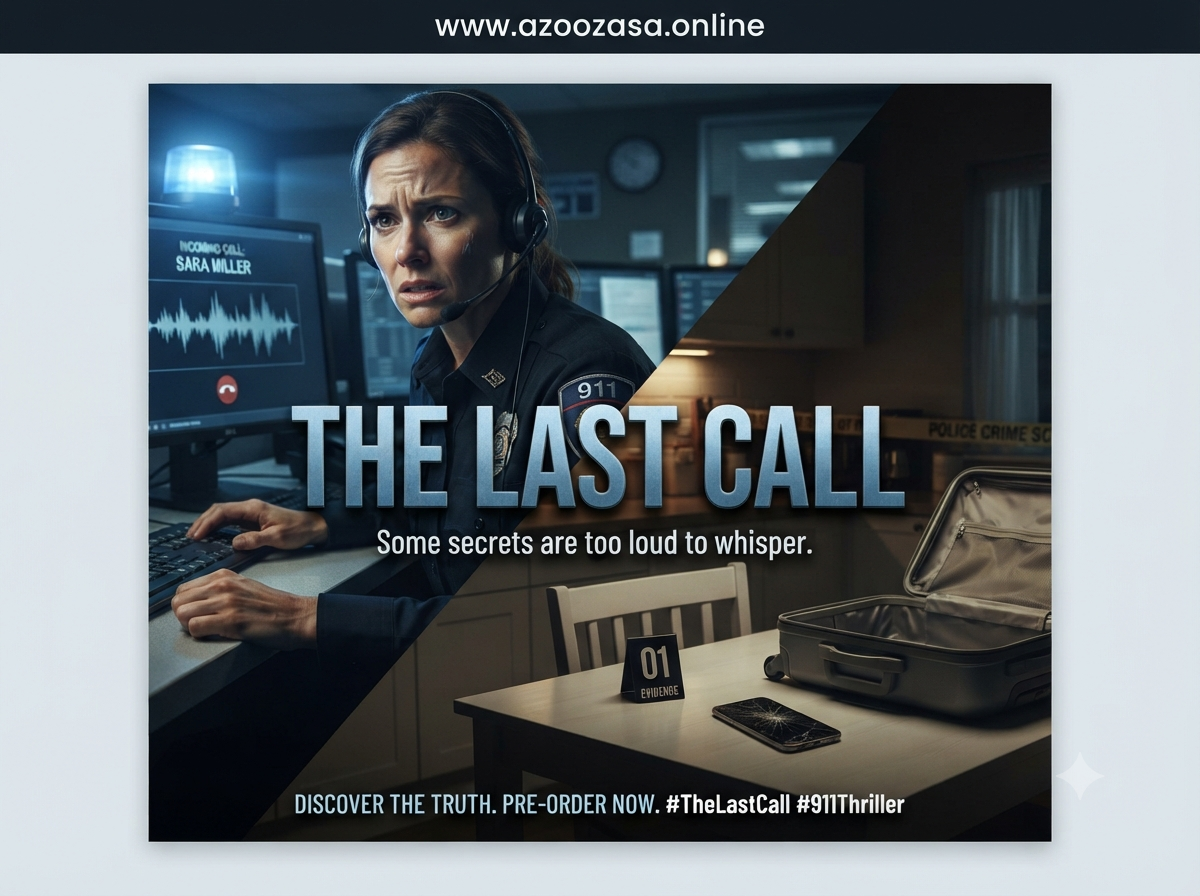
The digital clock on the dispatch console glowed 12:04 AM. In the dim, cavernous hum of the county emergency call center, Rachel Vance adjusted her headset, her eyes fixed on the pulsing amber light of line four.
Routine midnight shift. Usually, it was teenagers throwing rocks at abandoned warehouses, domestic disputes fueled by cheap whiskey, or lonely old men calling just to hear a human voice.
Rachel hit the button. “911, what is your emergency?”
A sharp intake of breath hissed through the static. Then, a voice—thin, trembling, and stripped of all its usual bright arrogance—whispered across the wire.
*“Rachel? Please… God, please tell me you’re on duty.”*
Ice water flooded Rachel’s veins. The headset slipped an inch down her ear. She hadn’t heard that voice in three years, not since the bitter family fracture that tore the Vance siblings apart.
“Chloe?” Rachel stood up so fast her chair rolled backward, slamming into the partition. “Chloe, where are you? What’s wrong?”
*“He’s in the house,”* Chloe choked out, her breath hitching into a sob. *“I heard the back door click. He’s walking up the stairs, Rach. He thinks I’m asleep—*”*
A sharp *thud* echoed through the phone line, followed by the muffled groan of old floorboards.
“Chloe, listen to me!” Rachel shouted, her dispatcher training kicking in even as panic threatened to tear her chest open. She slammed her left hand onto the keyboard, pulling up the home address linked to Chloe’s cell ping. *142 Elmwood Terrace.* “I’m dispatching units right now. Code three. Stay on the line, look at me—”
*“No, wait, he’s—he’s right outside the—*”*
A wet gasp. A sudden, violent crash of shattered glass.
And then, flat, unbroken silence.
“Chloe? *Chloe!*” Rachel screamed into the void of the dead line. The automated prompt clicked on: *Call disconnected.*
—
Fifteen minutes later, Rachel’s cruiser screeched to a halt in front of the Elmwood Terrace address, tires biting into the gravel. She threw open the door, ignoring protocol, ignoring the uniform sergeant screaming her name over the radio.
The house was dark, its colonial facade looking like a tomb under the harsh sodium glow of the streetlamp.
Inside, the living room was pristine. No overturned furniture, no blood, no signs of a struggle. But when Rachel pushed open the kitchen door, her breath caught.
Detective Marcus Vance—her older brother, a ten-year veteran of the city police department—was already standing by the island, leaning over a polished granite countertop with a flashlight.
“Marcus,” Rachel breathed, stepping inside. “Where is she? Did you check upstairs?”
Marcus didn’t turn around immediately. When he did, his face was carved from stone, his eyes dark and unreadable. “We cleared the whole house, Rach. There’s no intruder.”
“That’s impossible! I heard him! The glass—”
“There is no broken glass,” Marcus interrupted, his voice dropping into a hard, professional cadence. He pointed down at the counter.
Resting neatly in the center of the kitchen island was Chloe’s smartphone, screen dark. Right beside it sat a heavy canvas duffel bag, zipped shut and packed to the brim with clothes.
“What is that?” Rachel whispered, stepping closer.
“It looks like an exit bag,” Marcus said grimly. “Dispatch got a call from a neighbor thirty minutes ago complaining about a loud argument between Chloe and her husband. Looks like a domestic flare-up. She packed her bags, staged a dramatic exit, and took off.”
“No,” Rachel said, shaking her head violently. “No, you don’t know her! Chloe wouldn’t—she was terrified! She whispered my name!”
“People in fugues do desperate things, Rachel,” Marcus said, stepping forward and placing a heavy, paternal hand on her shoulder. His grip was a little too tight, a little too commanding. “Let it go. We’ll issue a missing persons flyer in forty-eight hours if she doesn’t check in. But right now, you need to go home. You’re compromised.”
Compromised. The word tasted like copper.
As Marcus turned away to speak with the responding patrol officers, Rachel’s gaze dropped back to the canvas duffel bag. A side pocket was half-unzipped, a corner of stiff white paper protruding from the mesh.
Moving on instinct, while Marcus’s back was turned, Rachel slid her fingers into the pocket and pulled the paper free, slipping it instantly into the deep pocket of her jacket.
—
At 3:00 AM, sitting under the flickering desk lamp of her apartment, Rachel unfolded the paper.
It wasn’t a personal letter. It was a certified bank receipt from the First Merchant Bank of Pennsylvania, dated two days prior, for fifty thousand dollars in cash, routed through an intermediary shell corporation named *Apex Holdings*. Attached to it was a ledger sheet filled with names, account numbers, and signatures.
One signature made Rachel’s stomach heave.
*Thomas Vance.*
Her oldest brother, Thomas—a man who worked as the chief financial auditor for the municipal transit authority, a man who drove a luxury sedan and lived in a gated country club community.
Rachel spent the next three hours digging into the secure municipal databases using her dispatcher override credentials. What she uncovered was a labyrinth of systemic rot. Apex Holdings wasn’t a real estate firm; it was a sophisticated money-laundering conduit funneling kickbacks from city construction contracts into offshore accounts. And at the center of the ledger wasn’t just Thomas.
It was Marcus.
And deeper still, financing the entire operation, was a local drug syndicate tied directly to high-ranking officials within the police department. Chloe hadn’t run away. She had stumbled onto the books, discovered that her husband and brothers were using her name to harbor illicit funds, and tried to pull out.
The midnight call wasn’t a random break-in. It was an execution.
Panic surged, hot and sharp, but Rachel forced it down. If she went to internal affairs, the file would vanish before sunrise. If she went to Marcus, she would end up like Chloe. She was entirely on her own.
By 8:00 AM, Rachel was parked two blocks away from the precinct headquarters. Her phone buzzed against the dashboard. An unknown number.
She swiped to answer.
*“You shouldn’t have gone looking through that bag, little sister,”* Marcus’s voice came through the speaker, low, steady, and utterly devoid of warmth. *“It’s a messy business. People get hurt.”*
“Where is she, Marcus?” Rachel demanded, her knuckles white on the steering wheel.
*“She tried to play a game she didn’t understand. Just like you’re doing right now. If you want to see her breathing, meet me at the old dry dock on Pier 4 in twenty minutes. Come alone. No radios. No backup.”*
The line clicked dead.
—
The wind off the river at Pier 4 was biting, carrying the sharp scent of diesel fuel and rotting timber.
The abandoned dry dock was a cathedral of rust—towering cranes skeletal against the gray morning sky, massive concrete pits where cargo ships once rested like hollowed-out leviathans.
Rachel killed her engine and stepped out of her car. Her hand rested on the service weapon holstered at her hip.
“Marcus!” she called out, her voice echoing off the corrugated metal walls of the warehouse.
Footsteps crunched on the gravel behind a stack of shipping crates. Marcus stepped out into the open. He wasn’t alone. Two burly men in plainclothes—department detectives Rachel recognized from narcotics—flanked him, their hands resting casually near their sidearms.
“I’m glad you came, Rachel,” Marcus said, walking slowly toward her, his expression eerily calm. “I always knew you were smart. Too smart for your own good, sometimes.”
“Where is she?” Rachel repeated, her eyes darting between the three men.
Marcus sighed, shaking his head. “Chloe brought this on herself. She thought she could blackmail us. She thought she could walk away with the ledger and cut a deal with the feds. We had to secure the assets, Rach.”
“You killed your own sister,” Rachel whispered, the horror of it crushing her lungs.
“We protected the family,” Marcus corrected sharply, taking another step closer. “And now, we’re going to protect ourselves. You’re going to write a brief, clean resignation letter stating you suffered a mental break over family stress. Then, you’re going to take a long, permanent leave of absence.”
Marcus reached into his jacket, pulling out a folded piece of paper and a pen, holding them out. “Sign it, Rachel. And you can walk away from this dock alive.”
Rachel stared at the paper. Her hand dropped toward her hip.
Marcus caught the movement instantly. “Don’t be stupid—”
Instead of drawing her weapon, Rachel whipped her other hand out from behind her back, slamming her finger down on the panic button of a tactical GPS beacon clipped to her belt.
*BEEP-BEEP-BEEP.*
A high-pitched signal pierced the air, broadcasting her exact coordinates and open mic audio directly to the federal task force channel she had pre-programmed into the system at dawn.
Marcus’s face twisted into a mask of pure rage. “You little bitch—!”
He drew his service pistol. One of the detectives behind him lunged forward.
Rachel didn’t hesitate. She dropped into a low crouch, drawing her own weapon just as the first shot cracked through the air, chipping concrete inches above her head. She fired twice—not to kill, but into the thick hydraulic lines of the nearby crane machinery high above them.
With a deafening shriek of tearing metal and bursting pressure, a cascade of heavy iron chains and scaffolding came crashing down between Marcus and the two detectives, splitting the dry dock in half and kicking up a blinding cloud of rust and dust.
Sirens wailed in the distance—not local precinct cruisers, but the heavy, high-pitched wails of federal agents moving in from the highway.
Through the dust cloud, Marcus scrambled backward, cursing, realizing the trap had closed. The two detectives threw their hands up as federal tactical vehicles swarmed the perimeter, lights flashing blinding blue and red against the rusted steel.
As federal agents swarmed the dock, tackling Marcus to the gravel and slapping cuffs on his wrists, Rachel stood alone in the center of the chaos, her breath coming in ragged gasps.
A heavy wool blanket was draped over her shoulders a moment later by a federal investigator, but she barely felt it. Her eyes were fixed on the side door of the administrative trailer at the end of the dock, where medics were wheeling out a gurney.
A woman—pale, battered, wrapped in thermal foil, but blinking into the daylight—was sitting up, coughing violently.
Rachel broke into a run, her boots crunching over the gravel, pushing through the federal perimeter until she reached the gurney.
Chloe looked up, her eyes wide with shock and disbelief, tears finally breaking free.
“Rach,” Chloe choked out, her voice cracking.
Rachel grabbed her sister’s cold hands, squeezing them so hard her knuckles turned white. She didn’t say a word. She just held on, knowing the nightmare was finally over, and the dark water of the past had finally broken open to let the light back in.



0 comments