

## The High Arc
The bronze bust of Jim Callahan gleamed under the Springfield spotlights, a monument to forty years of hardwood gospel. Around him, three generations of players stood in reverent silence, applauding a man who had built a dynasty not just on wins and losses, but on what he famously called “the architecture of character.”
From the front row of the induction ceremony, Jim’s eldest daughter, Clara, watched her father take the podium. He adjusted his glasses, his eyes misting with practiced, grandfatherly grace.
Millions were watching nationwide. He spoke of early mornings in damp high school gyms, of sweat, loyalty, and the sacred trust between a coach and his boys.
Clara didn’t clap. Her hands remained folded in her lap, gripping a heavy manila folder so tightly her knuckles had turned chalk white. Inside that folder lay forty years of shattered trust—sworn affidavits, bank routing numbers, medical records of bruised ribs disguised as practice injuries, and audio transcripts proving that the legendary Jim Callahan had spent decades trading silence for scoreboards, turning a blind eye to systematic physical abuse and a massive point-shaving ring.
Two hours later, as the ballroom erupted into a champagne toast, Clara slipped out a side exit. Her phone was already vibrating with a cascading earthquake of notifications. By midnight, her twenty-page digital exposé was live on the front page of the national sports network where she worked as an enterprise journalist.
By sunrise, the basketball world had ceased to turn.
—
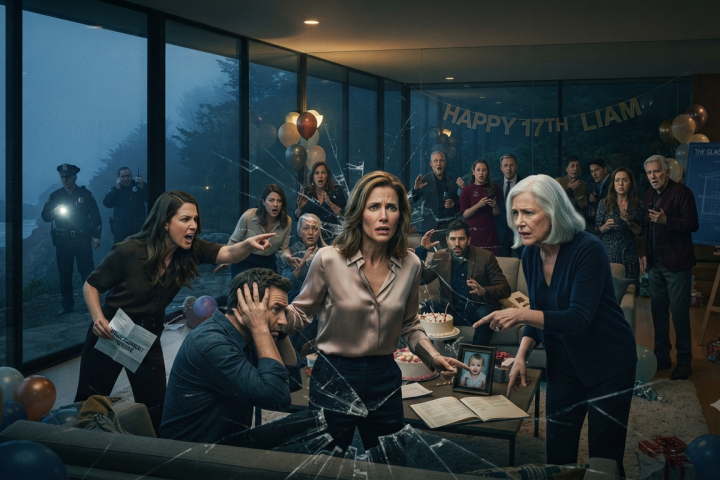
The fallout was immediate and brutal. The Callahan household in suburban Chicago, usually a sanctuary of warmth and post-game analysis, transformed into a fortress under siege. News vans clogged the cul-de-sac, their satellite dishes pointing toward the sky like metallic vultures.
Clara walked through the front door at noon, her key turning heavily in the lock. The moment she stepped into the foyer, the air felt suffocating.
Her mother, Sarah, sat at the kitchen island. For forty years, Sarah had been the quiet backbone of the program, washing jerseys, hosting recruits, and stitching torn ligaments together with fierce maternal pride. Now, her eyes were rimmed with red, burning with a cold, unforgiving fury.
“How could you?” Sarah’s voice was a harsh whisper, devoid of its usual melodic cadence.
Coach Marcus Vance, Jim’s longtime assistant and surrogate uncle to Clara, stood by the window, peering through the blinds at the reporters outside. He turned slowly, his face twisted in disgust. “We raised you in those gyms, Clara. Your father put food on your table with every single one of those wins. You didn’t just stab him in the back—you gutted him for a byline.”
“It’s not about a byline, Marcus,” Clara said, stepping forward, her voice shaking but resolute. “Boys were hospitalized. Families were threatened if they spoke out about the abuse. And the point-shaving—you know damn well what was happening in the locker rooms during the tournament runs.”
“They were tough kids! They played hard!” Marcus yelled, slamming his hand against the wall. “You took a few bruised ribs out of context and turned it into a witch hunt because you wanted to make a splash in national media!”
“Stop it, Marcus,” a quiet voice intervened.
Jim Callahan walked slowly out of the den. He looked ten years older than he had on the stage in Springfield. The tailored suit was gone, replaced by a worn cardigan. He didn’t look angry; he looked like a ghost haunting his own legacy. He looked at Clara not with fury, but with a profound, crushing disappointment.
“Your mother and I gave you everything, Clara,” Jim said softly, his voice trembling slightly. “If you had questions, why didn’t you come to me? Why put it out for the wolves?”
“Because if I came to you, Dad, it would have been buried in a filing cabinet just like everything else,” Clara said, tears finally spilling over her lashes. “You built an empire on fear and silence. Somebody had to break it.”
Sarah stood up, her chair scraping sharply against the hardwood. “Get out,” she whispered, pointing a shaking finger toward the front door. “You are no longer welcome in this house. You traded your own blood for fifteen minutes of fame. Get out, or I swear to God, I’ll call the police for trespassing.”
—
The public backlash was swift and terrifying. Social media witch-hunts branded Clara a traitor. Anonymous death threats flooded her work email and social channels, forcing her editors to assign round-the-clock security detail to her apartment. Online forums posted her home address, urging angry fans to make her pay for destroying the game’s greatest icon.
Yet, despite the pressure from her family, her colleagues, and millions of enraged fans, Clara refused to budge an inch. When her network executives offered to let her take a paid leave of absence to “cool things down,” she slammed her fist on the desk.
“If you pull or soften a single sentence of that piece, I resign and publish the source codes independently,” she told the editor-in-chief. “The documents are ironclad. Let them sue us. Discovery will expose the rest.”
By day four, the truth proved too heavy to suppress. Former players, emboldened by Clara’s courage, began coming forward on morning news shows, corroborating the physical abuse and detailing how they had been coerced into fixing games under threat of losing their scholarships. The university president announced an independent, criminal investigation. Sponsors pulled their funding by the millions.
The edifice was crumbling, and there were no more plays to run.
—
On the fifth night, late in the evening, Clara’s phone rang. It was an unrecognized, encrypted number.
“Clara,” a heavy, exhausted voice breathed. It was her father.
“Dad? Where are you?”
“I’m at the studio downtown,” Jim said. “The morning show. They offered me a live interview segment at six a.m. Your mother and Marcus… they wanted me to go on the offensive. They wanted me to deny everything, to call you a liar.” He paused, a long, ragged sigh echoing through the receiver. “I told them no.”
Clara’s breath hitched. “Dad, what are you doing?”
“I read the files again, Clara. Every single page you attached to that story,” Jim said, his voice cracking with the weight of a lifetime of rationalizations. “I spent forty years convincing myself that the ends justified the means. That discipline mattered more than humanity. I was wrong.”
“You’re going to confess?”
“I’m going to tell the truth,” Jim said softly. “The high arc is over, sweetheart. It’s time to face the music.”
At six o’clock the next morning, millions tuned in across the country. Sarah and Marcus sat in the dark living room of the suburban house, watching the screen in stunned, icy silence as the broadcast went live.
Jim Callahan sat in the interview chair, looking directly into the camera lens. The anchor leaned forward, voice solemn. “Coach Callahan, your daughter’s reporting has shaken the sports world to its core. How do you respond to these allegations of abuse and corruption?”
Jim didn’t blink. He looked tired, vulnerable, and completely stripped of his legendary armor.
“My daughter Clara told the truth,” Jim said clearly, his voice steadying as he spoke the hardest words of his life. “For decades, I prioritized the scoreboard over the safety and dignity of the young men entrusted to my care. I allowed a culture of abuse to fester, and I looked the other way when integrity was traded for wins. I accept full responsibility for my actions, and I apologize to every player, every family, and every person I failed.”
In her apartment, surrounded by security boxes and the lingering shadow of threats, Clara watched the screen. A single tear slipped down her cheek, but as she listened to her father finally shatter the wall of silence, the suffocating weight in her chest lifted. The game was over, but for the first time in her life, the truth had won.



0 comments