
Most people do not actively choose their lives; they default into them.
They drift into careers to pay immediate bills, adopt daily habits shaped by targeted algorithms, and absorb stress from events completely outside their control. By middle age, life feels less like an intentional journey and more like a series of reactions to external demands.
Reclaiming momentum does not require a dramatic, overnight overhaul. It requires establishing clear, non-negotiable boundaries for how you direct your energy, time, and attention.
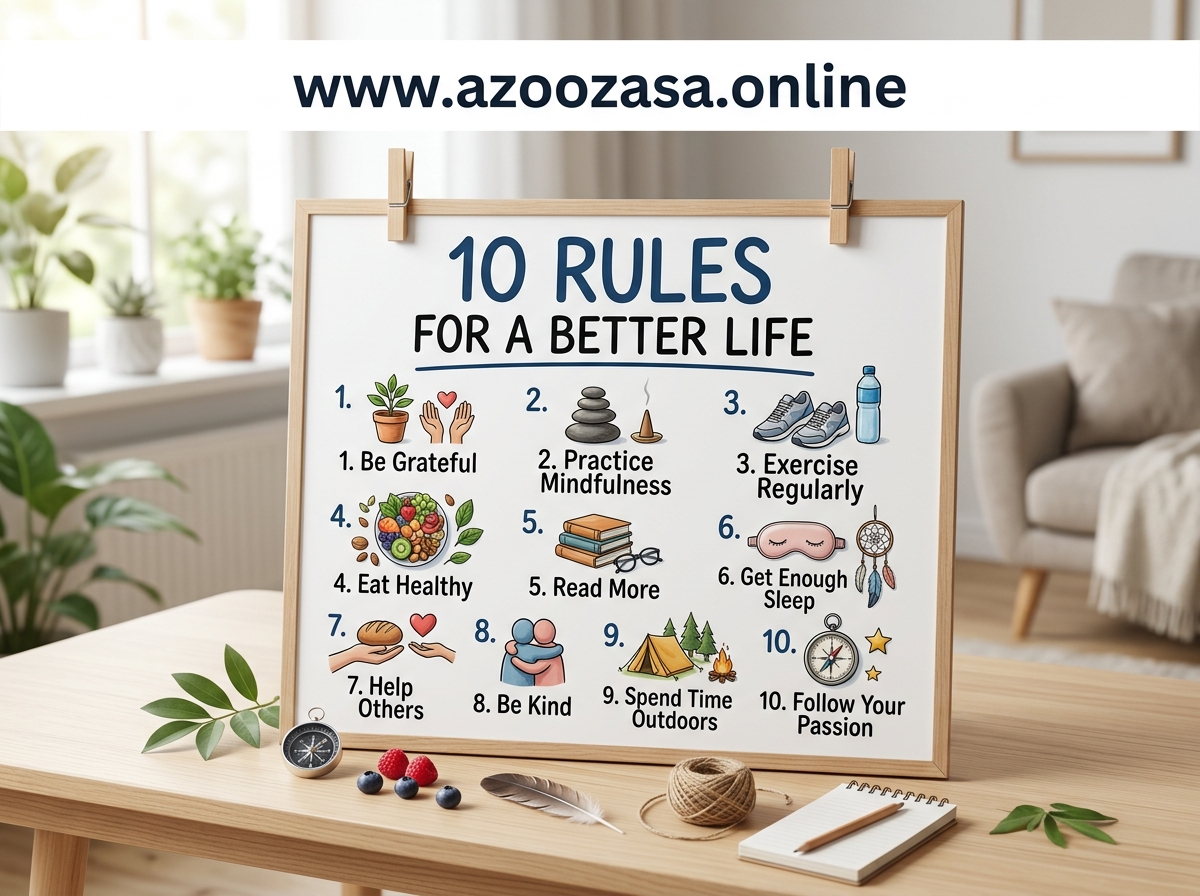
Here are 10 foundational rules for building a better, highly intentional life.
1. Claim Radical Ownership
Blame is comfortable, but it is ultimately disempowering. The moment you blame your past, your upbringing, your boss, or the economy for your current state, you hand over your agency to those exact external forces. Taking radical ownership does not mean accepting fault for everything that happens to you; it means accepting total responsibility for how you respond and where you go next.
2. Narrow Your Focus to What You Control
Frustration thrives in the gap between what you care about and what you can actually influence. You cannot control macroeconomics, traffic, public opinion, or the behavior of others. You can only control your input, your effort, and your internal reaction. Reclaim the energy you waste on external noise and channel it entirely into your immediate sphere of influence.
3. Choose Short-Term Discomfort Over Long-Term Regret
The easiest choice in the moment almost always compounds into the hardest life over time. Avoiding tough conversations, skipping workouts, and delaying difficult projects yields immediate relief, but it eventually creates deep systemic friction. Reframe voluntary discomfort—exercising, speaking up, or tackling complex problems—as a necessary tax paid upfront for future freedom.
4. Protect Your Attention Like a Limited Asset
Your focus is the fundamental currency of your life. Every app, newsfeed, and notification is engineered to capture and monetize it. When you fail to guard your attention, you end up building someone else’s priorities instead of your own. Treat your attention as a high-value resource: eliminate passive scrolling, set strict digital boundaries, and schedule blocks of uninterrupted deep focus.
5. Trade Assumption for Curiosity
The moment you believe you have something entirely figured out—whether a person, a skill, or a industry—your growth stops. Approach challenges and opposing viewpoints with active curiosity rather than defensive judgment. Assume that every person you meet knows something you don’t, and treat daily life as an continuous learning laboratory.
6. Prioritize Consistency Over Intensity
Heroic, temporary bursts of effort make great stories, but quiet, unglamorous daily habits build real results. A mediocre workout plan executed five days a week for five years will always outperform a flawless workout plan followed for two weeks and abandoned. Shift your focus away from setting aggressive goals and onto building reliable, sustainable daily systems.
7. Treat Your Health as a Core Engine
Mental clarity, emotional stability, and professional stamina are all downstream from physical well-being. No amount of willpower can overcome chronic sleep deprivation, a stagnant lifestyle, and poor nutrition. Treat sleep, daily movement, and nutrient-dense food as baseline operational requirements, not luxury self-care activities.
8. Audit Your Social Circle
You naturally mirror the energy, standards, and mindsets of the people you spend the most time around. If your core circle is chronically cynical, stagnant, and reactive, staying proactive requires an exhausting uphill battle. Cultivate relationships with people who challenge your thinking, hold high personal standards, and celebrate your growth.
9. Define Success on Your Own Terms
If you do not explicitly define what a good life looks like for you, society will happily fill in the blank with generic metrics: prestige, physical possessions, and public approval. Take the time to clarify what true success looks like on a practical level. Often, freedom, peace of mind, and schedule flexibility far outweigh the traditional markers of status.
10. Practice Presence and Active Gratitude
It is entirely possible to accomplish every goal you set and still feel empty if you spend your life living in the future. Gratitude is not a passive emotion; it is an active discipline of noticing and appreciating what is already functioning well in your life. Achieving your ambitions means very little if you never train yourself to enjoy the terrain along the way.
A meaningful life is not built by waiting for perfect conditions to arrive. It is constructed through the small, disciplined decisions you make on average, unglamorous days. Pick one or two of these rules to focus on this week, implement them consistently, and let momentum do the rest.



0 comments