
 Fruit often gets an unfair reputation in low-carb and low-sugar diets. Driven by fears of fructose spikes, many people cut out nature’s sweet treat entirely, missing out on vital antioxidants, essential minerals, and dietary fiber.
The secret isn’t avoiding fruit—it’s choosing varieties that deliver maximum nutrition with minimal glycemic impact. By selecting fruits rich in water and fiber, you can satisfy your sweet tooth, protect your metabolic health, and maintain steady energy all day long.
Here are the best low-sugar fruits to keep your diet vibrant, delicious, and blood-sugar friendly.
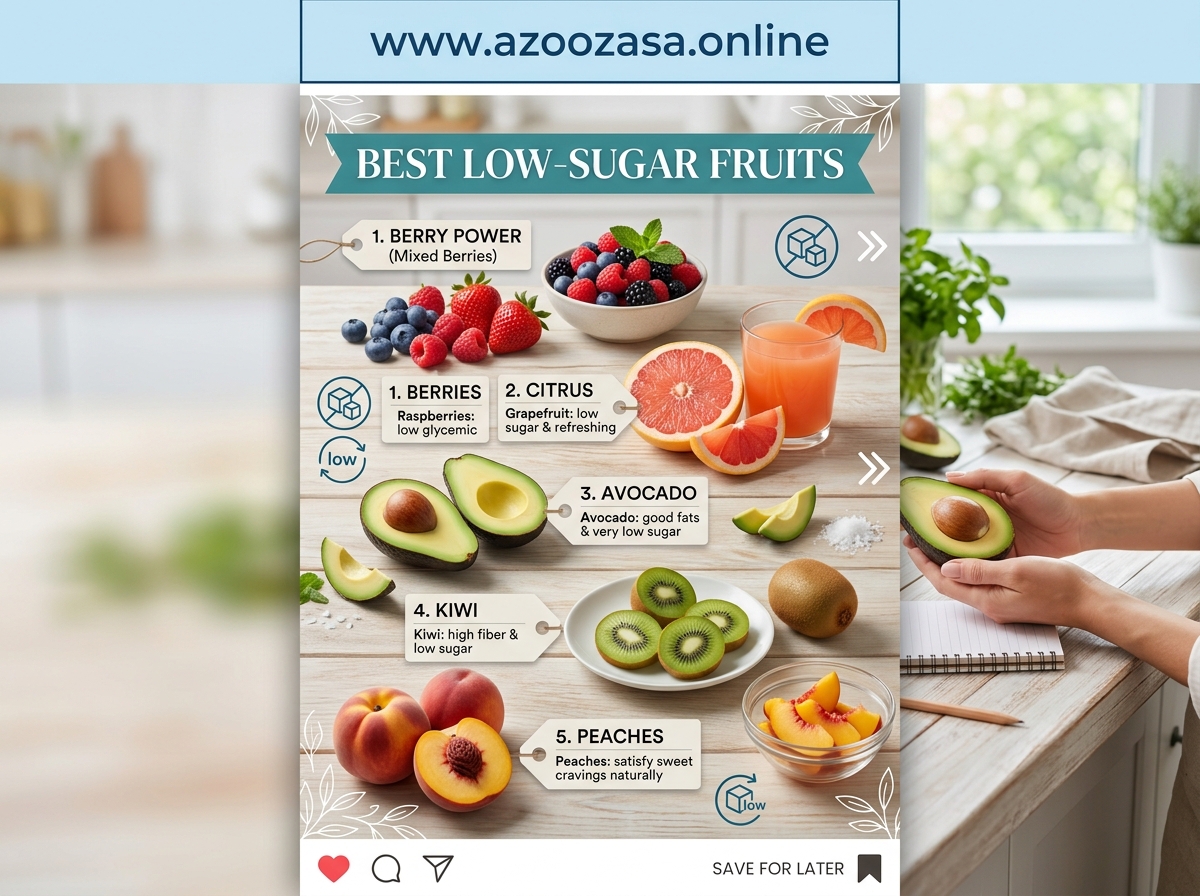
1. Avocados: The Zero-Sugar Champion
Though often treated as a vegetable, the avocado is botanically a fruit—and the undisputed king of low-sugar options. Containing virtually zero sugar alongside rich monounsaturated fats and fiber, half an avocado slows digestion, improves nutrient absorption, and keeps you full for hours.
2. Raspberries: High Fiber, Low Glycemic Load
Raspberries are a nutritional miracle. With less than five grams of sugar per cup and a massive eight grams of dietary fiber, their net carb count is remarkably low. Their rich ruby hue comes from polyphenols that actively combat oxidative stress.
3. Strawberries: Maximum Volume, Sweet Satisfaction
Packed with vitamin C and water, a full cup of whole strawberries contains only about seven grams of sugar. They offer a satisfyingly sweet bite and robust antioxidant profile without causing dramatic insulin spikes.
4. Blackberries: Deep Color, High Protection
Like their berry cousins, blackberries are loaded with dark anthocyanin pigments that support heart and brain health. A cup delivers under seven grams of sugar along with nearly half your daily recommended intake of manganese and vitamin C.
5. Lemons and Limes: Tart Flavor Boosters
With barely one to two grams of sugar per fruit, lemons and limes are perfect for adding bright flavor to water, dressings, and grilled dishes. Their citric acid content supports digestion and enhances iron absorption from leafy greens.
6. Watermelon: Hydrating and Light
Despite its sweet flavor, watermelon is over 90% water. A cup of diced watermelon contains roughly nine grams of sugar, making its overall glycemic load quite low when enjoyed in sensible portions. It also provides lycopene, a potent antioxidant that supports cardiovascular health.
7. Grapefruit: Citrus with a Metabolic Edge
Half a medium grapefruit contains about eight grams of sugar and delivers a generous dose of vitamin A and C. Its signature tart flavor helps curb cravings, while its soluble fiber content aids in stabilizing post-meal blood sugar levels.
8. Kiwis: Nutrient-Dense Tang
Kiwis pack an extraordinary amount of nutrition under their fuzzy skin. A single kiwi contains about six grams of sugar and offers more vitamin C than an orange, alongside unique enzymes that aid in protein digestion.
9. Peaches: Summer Sweetness in Moderation
When you crave a traditional stone fruit, peaches are a fantastic choice. A medium peach contains under ten grams of sugar while providing potassium, beta-carotene, and dietary fiber to keep your energy steady.
Eating for low sugar doesn’t mean banishing fruit from your kitchen. By prioritizing berry varieties, citrus, and fiber-rich options, you can enjoy vibrant flavors and vital micronutrients without compromising your health goals. Snack on them whole, toss them into salads, or pair them with healthy fats for a perfectly balanced, low-sugar treat.




0 comments