
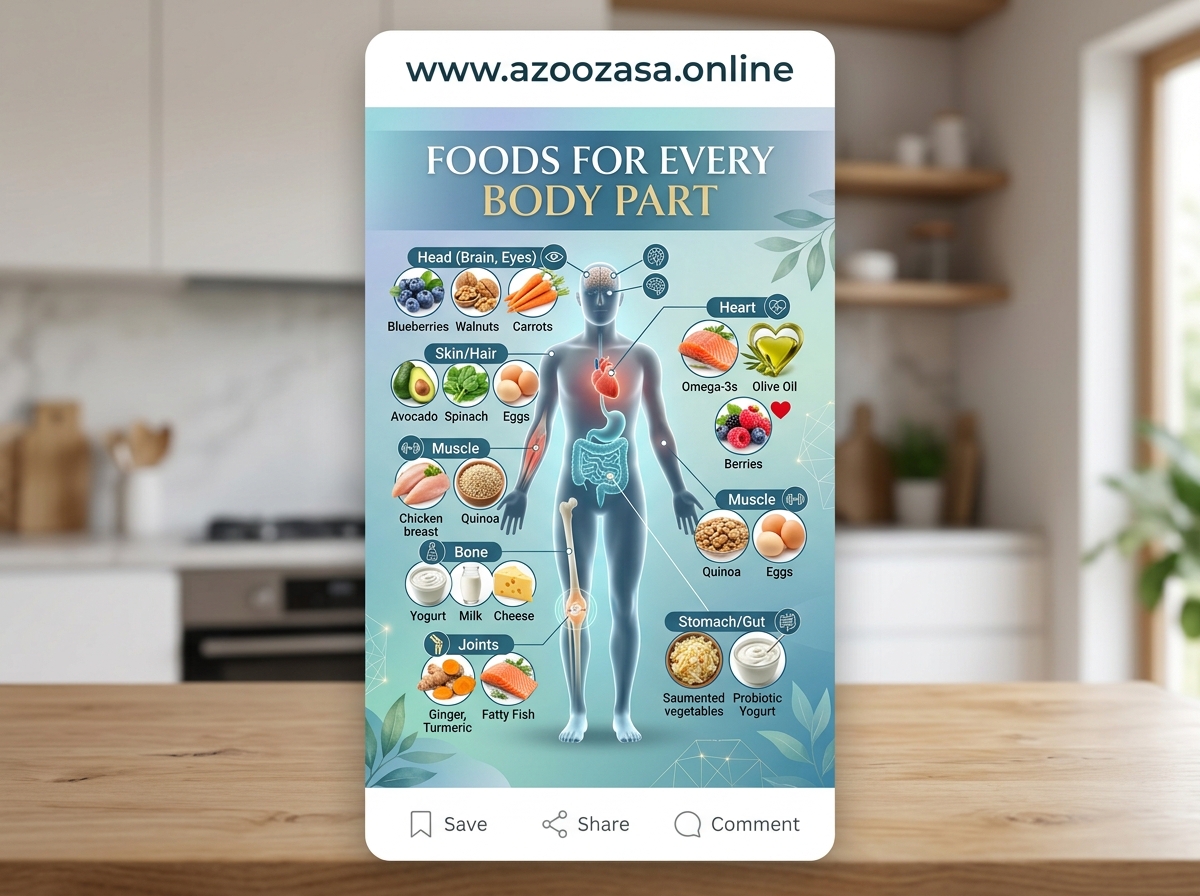
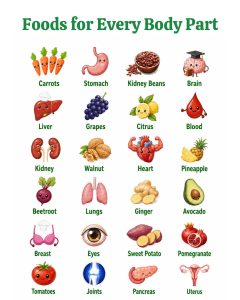
 It is an uncanny coincidence of nature that so many whole, unrefined foods closely resemble the exact human organs they nourish.
Slice open a walnut, and you will see a striking likeness to the human brain, complete with left and right hemispheres. Cut a carrot, and the cross-section mirrors the intricate pattern of a human iris. Beyond visual poetry, modern nutritional science confirms what ancient wisdom long suspected: nature often leaves visual clues pointing directly toward the specific biological systems a food best supports.
By aligning your plate with your anatomy, you can targetedly fuel every system from your brain down to your bones. Here is your ultimate biological guide to targeted nutrition for every body part.
1. Brain: Walnuts & Dark Chocolate
Walnuts are exceptionally high in DHA, a type of omega-3 fatty acid critical for neuroprotection and maintaining cellular membrane health in brain tissue. Paired with dark chocolate—rich in brain-boosting flavonoids and magnesium—these foods enhance cognitive performance and protect neurons from oxidative stress.
2. Eyes: Carrots & Leafy Greens
Carrots derive their bright orange hue from beta-carotene, a precursor to vitamin C and A that helps preserve night vision and protects the cornea. Meanwhile, dark leafy greens like spinach deliver lutein and zeaxanthin, twin antioxidants that shield your eyes from harmful blue light and age-related degeneration.
3. Heart: Tomatoes & Avocados
Tomatoes are packed with lycopene, a powerful lipid-soluble antioxidant that drastically reduces cardiovascular inflammation and lowers LDL cholesterol oxidation. When paired with the monounsaturated healthy fats of an avocado, lycopene absorption increases up to fourfold, helping keep arterial walls flexible and clean.
4. Lungs: Apples & Citrus Fruits
Apples contain a potent flavonoid called quercetin, which helps protect airway linings from environmental pollutants and reduces histamine responses. Citrus fruits like oranges and grapefruits add high doses of vitamin C, bolstering lung immunity and supporting healthy respiratory capacity.
5. Stomach & Gut: Ginger & Fermented Foods
Ginger contains gingerol, an active compound that accelerates stomach emptying and alleviates gastrointestinal distress. To keep the lower digestive tract balanced, fermented foods like kefir, kimchi, and wild sauerkraut deliver billions of active probiotics that fortify the gut barrier.
6. Bones & Joints: Sesame Seeds & Fatty Fish
While dairy often gets the spotlight, tiny sesame seeds deliver an extraordinary concentration of bioavailable calcium, zinc, and magnesium necessary for bone density. Fatty fish like wild salmon provide essential vitamin D to drive calcium absorption, alongside omega-3s that lubricate joint tissue and suppress inflammation.
7. Skin: Berries & Sweet Potatoes
Sweet potatoes supply abundant beta-carotene, which acts as a natural internal sun filter, promoting skin cell turnover and a radiant complexion. Dark berries like blackberries and blueberries supply vitamin C to stimulate collagen production, preserving skin elasticity and firmness.
8. Kidney & Urinary System: Cranberries & Watermelon
Watermelon is over 90% water and rich in potassium, making it a natural diuretic that aids the kidneys in flushing out metabolic waste. Cranberries contain unique A-type proanthocyanidins that prevent unwanted bacteria from adhering to the bladder walls, keeping the urinary tract clear.
Eating with intention doesn’t require memorizing complex chemical formulas or buying exotic supplements. By looking to nature’s whole, unrefined offerings, you gain an intuitive map for complete health. Next time you sit down to a meal, don’t just eat to fill your stomach—fuel your heart, protect your mind, and nourish every organ that keeps you alive.




0 comments