
The noise of the city was a constant, low-frequency hum that had nested in the center of Sarah’s chest. Between the demands of her project deadlines and the relentless pull of a digital world, she felt less like a person and more like a tightly wound spring, always seconds from snapping. It wasn’t just physical stiffness—though her shoulders were permanently locked near her ears—it was a total mental congestion. The idea of yoga felt like one more item on an impossible to-do list, until she stumbled into a beginner class one Tuesday evening, desperate for quiet.
She didn’t find quiet. She found an ancient structure designed to process stress. The instructor, an older man with kind, steady eyes, handed her a small list. It wasn’t full of impossible pretzel contortions; it was a sequence of nine simple, purposeful shapes. He didn’t promise enlightenment in an hour. He promised a release, provided she showed up every single day.
-
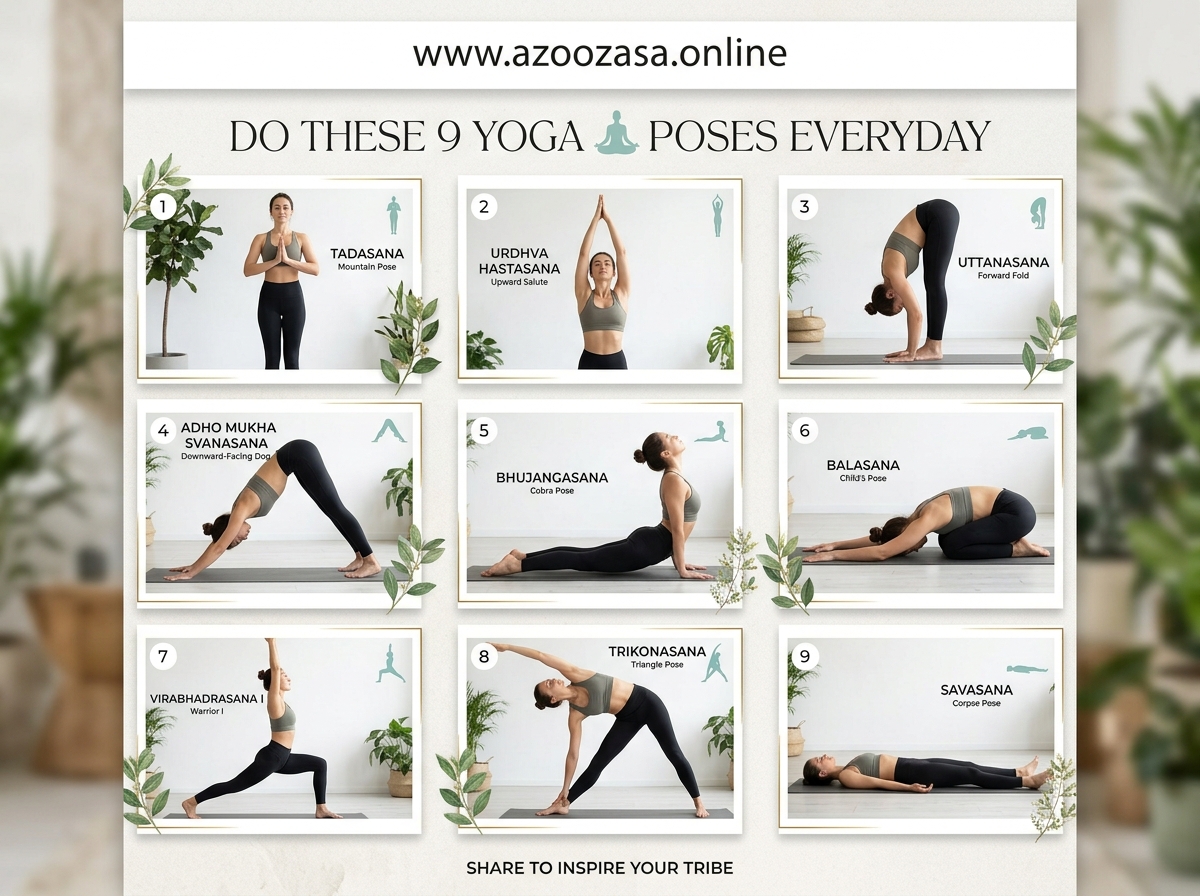
Mountain Pose (Tadasana): The simple act of standing with full, conscious intent. This pose grounds the body, stabilizes the mind, and immediately starts to lower the stress response.
-
Tree Pose (Vrksasana): A subtle battle for balance. While the rooted leg strengthens, focusing the mind on a single point stills the internal chatter.
-
Warrior II (Virabhadrasana II): This open-hipped stance builds fierce determination. Holding this pose strengthens the legs while opening the chest, a powerful antidote to a full day spent hunching.
-
Triangle Pose (Trikonasana): Reaching and grounding at once. Triangle pose stimulates the abdominal organs and gives a crucial side-body stretch, which is rare in our forward-facing lives.
-
Downward-Facing Dog (Adho Mukha Svanasana): The ultimate total-body reset. This inversion decompresses the spine, stretches the legs, and calms the nervous system by bringing blood to the head.
-
Cobra Pose (Bhujangasana): A direct weapon against desk posture. This heart-opener strengthens the posterior chain and physically reverses the physical ‘closing off’ caused by stress.
-
Cat-Cow Pose (Marjaryasana-Bitilasana): A dynamic, rhythmic flow that links breath to movement. Moving the spine from flexion to extension relieves tension in the deep back muscles.
-
Legs-Up-The-Wall Pose (Viparita Karani): A passive, restorative inversion. Just ten minutes in this pose drains the static from tired legs and shifts the nervous system out of ‘fight-or-flight.‘
-
Corpse Pose (Savasana): The hardest pose to master, the pose of complete non-doing. In this stillness, the brain creates new neural pathways and synthesizes the benefits of the entire practice.
That first Tuesday class was messy. Sarah felt awkward and clumsy, and her mind fought the stillness at every turn. But the next day, she unrolled her mat in her small living room. And the day after that. It didn’t take long before the daily ritual became a sanctuary, not another obligation. The nine poses became a framework on which she could rebuild her foundation. A year later, Sarah’s project deadlines still exist, and the city is just as noisy. But the constant, humming tension is gone. She no longer feels like a coiled spring. She has found the space between the noises, and in that quiet, she finally found herself.




0 comments