
The Paper Plate Facade: A Welder’s Thanksgiving Masterclass
The scent of roasted sage, browned butter, and expensive Pinot Noir did little to mask the suffocating pretension that filled my brother-in-law’s dining room. Carlton’s home was a sprawling, half-million-dollar modern farmhouse construct, entirely out of place in our quiet Midwestern county, nestled deep within a newly paved subdivision where the lawns were manicured by professionals and the smiles were entirely synthetic. Carlton was a mid-level financial analyst who fundamentally believed that a man’s worth was calculated exclusively by his zip code and the badge on his steering wheel.
My husband, Ray, on the other hand, was a master pipefitter and structural welder. He was a man composed entirely of quiet strength, calloused hands, and the kind of unshakable self-respect that cannot be bought in a boutique.
The Thanksgiving table was set with breathtaking arrogance. Carlton’s wife, my sister Elena, had arranged an intricate centerpiece of imported autumn flora, flanked by heavy, gold-rimmed porcelain plates that had been handed down through Carlton’s supposedly aristocratic lineage. When it was time to serve, Carlton stood at the head of the table, theatrically carving the turkey and distributing the heavy china to the guests. He handed a plate to his mother, his boss, Elena, and myself.
Then, he reached beneath the serving cart, pulled out a flimsy, wax-coated Dixie paper plate, loaded it with dark meat and a scoop of mashed potatoes, and slid it across the mahogany table toward Ray.
The dining room went completely, devastatingly silent. The clinking of crystal goblets ceased.
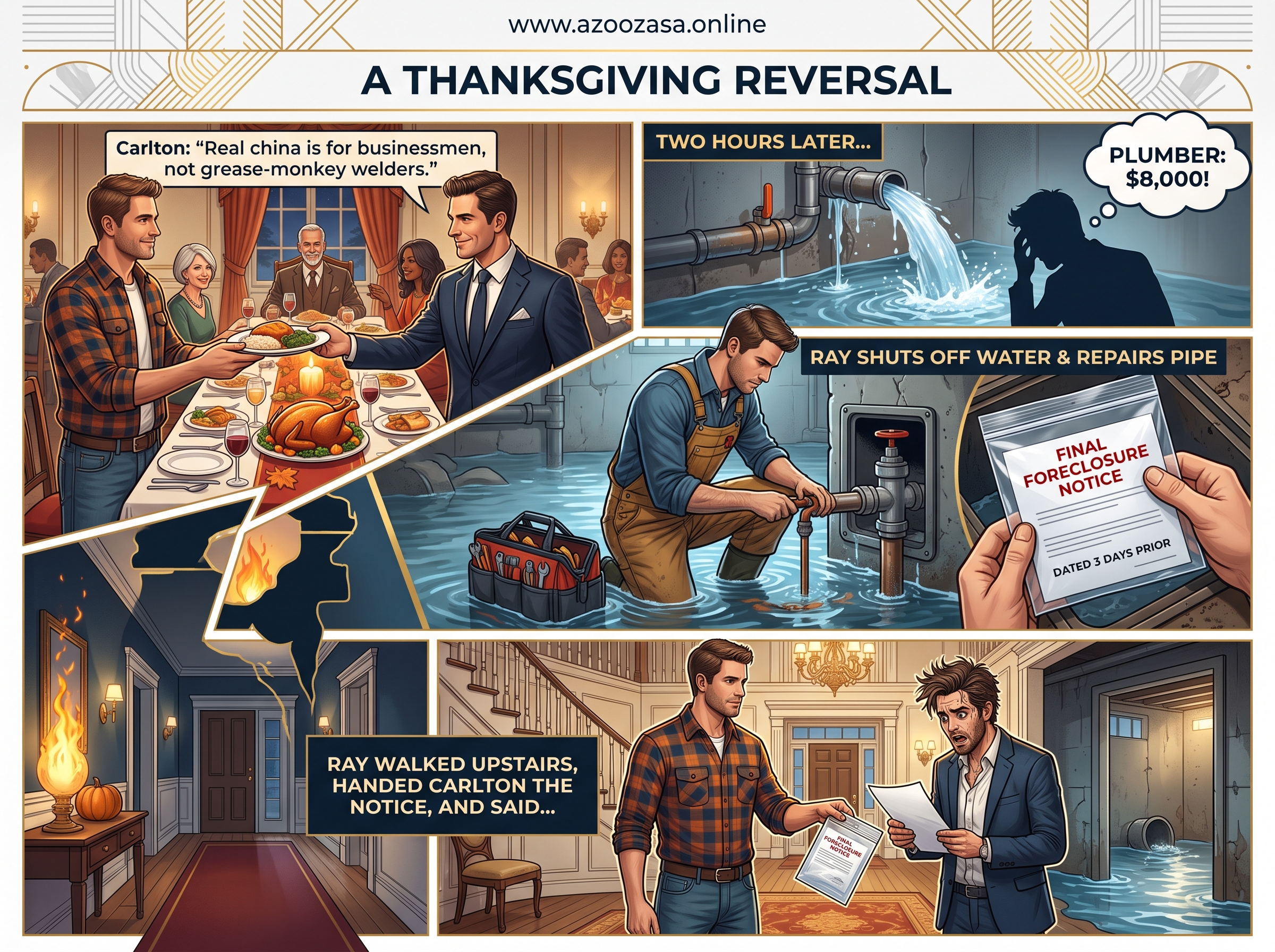
“Don’t take it personally, buddy,” Carlton laughed, a harsh, nasal sound that echoed off the vaulted ceiling. He took a sip of his wine, looking down his nose at my husband. “But real china is for businessmen. Not grease-monkey welders. I can’t have that industrial grime scratching up a family heirloom.”
My face flushed a violent, furious crimson. I pushed my chair back, fully prepared to drag my husband out of that toxic house and never speak to my sister’s husband again. But before I could stand, Ray’s large, scarred hand reached under the table and gently rested on my knee. His grip was firm, grounding, and absolutely calm.
Ray looked down at the paper plate. He didn’t scowl. He didn’t flush with humiliation. He simply picked up his stainless-steel fork, offered Carlton a slow, measured smile, and said, “Looks delicious, Carlton. Thank you for the meal.”
He ate his dinner in total peace, his dignity completely untouched by the desperate cruelty of a smaller man. Carlton, visibly disappointed that he hadn’t provoked a reaction, spent the next two hours loudly bragging about his aggressive stock portfolio, his upcoming promotion, and the crowning jewel of his real estate empire: his newly finished, seventy-thousand-dollar basement, complete with a custom wet bar and imported leather recliners.
The universe, it seems, has a profound and highly specific sense of irony.
Just as Elena was bringing out the pumpkin pies, a violent, percussive thump shuddered through the floorboards. It was followed instantly by a sickening, high-pressure hiss that sounded like a jet engine spooling up directly beneath our feet.
“What the hell was that?” Carlton gasped, his wine glass freezing halfway to his mouth.
The answer came in the form of a frantic, rushing roar. We all stampeded toward the basement door. Carlton ripped it open, and the smell of wet, crumbling drywall and muddy water hit us like a physical wall. The main municipal water line, which fed directly into the house’s foundation, had suffered a catastrophic failure. A pressurized geyser of freezing, dirty water was blasting horizontally across Carlton’s pristine home theater, rapidly filling the sunken floor. Six inches of water was already destroying the plush carpeting, soaking the baseboards, and creeping up the legs of his imported leather furniture.
“Shut it off!” Elena screamed, clutching her head in terror.
“I don’t know how!” Carlton shrieked, his face entirely drained of color, his aristocratic composure shattering into sheer, unadulterated panic. He scrambled for his phone, his hands shaking so violently he nearly dropped it down the stairs. He dialed the county’s premium emergency plumbing service. We could hear the dispatcher’s voice through the receiver.
“Eight thousand dollars?!” Carlton wailed, his voice cracking into a high-pitched sob. “Just to drive out here on a holiday?! You have to be kidding me! My house is sinking!”
He dropped the phone, sinking to his knees on the carpeted landing, hyperventilating as he watched his seventy-thousand-dollar sanctuary turn into a muddy aquarium.
Ray didn’t say a word. He calmly set his coffee mug on the hall table, stepped over a weeping Carlton, and walked out the front door. Less than two minutes later, he returned carrying his heavy, worn canvas tool bag.
Without hesitating, Ray waded straight into the frigid, calf-deep water. The ruins of Carlton’s basement sloshed against his work boots. Ray navigated the debris with the focused, mechanical precision of a man who spent his life in industrial disaster zones. He waded to the utility closet, kicked the door open, and immediately located the main municipal master valve. With a violent jerk of his heavy, calloused hands, he wrenched the rusted iron wheel clockwise.
The deafening roar of the water choked, sputtered, and finally died.
The basement plunged into a heavy, dripping silence. Ray didn’t stop to admire his work. He pulled a heavy-duty flashlight from his bag and inspected the damage. The primary PVC-to-copper transition fitting had completely shattered under the municipal pressure spikes. It was a complex, miserable fix that would have taken a standard plumber three hours and thousands of dollars in emergency labor to isolate and repair.
Ray pulled a portable MAP gas torch, a pipe cutter, and a length of emergency copper slip-fitting from his bag. For twenty minutes, the only sound in the house was the sharp, aggressive hiss of the blue flame and the focused, rhythmic movements of a master craftsman. He cut away the shattered plastic, cleaned the jagged burrs from the copper pipe, applied the flux, and sweat the new joint into place with flawless, watertight precision.
When he was finished, he reached out to secure the heavy metal cover of the municipal valve box set deep into the foundation wall. As his fingers brushed the inside of the dark, damp recess, they caught on something unusual.
It was a thick, waterproof plastic pouch, heavily secured with duct tape to the absolute darkest, most inaccessible corner of the valve box—a place literally no one would ever look unless a catastrophic emergency forced them to rip the panel apart.
Ray peeled the tape away. He opened the plastic seal and pulled out a thick stack of heavy, legal-stock paper. The edges were stamped in bold, terrifying red ink.
Ray read the top sheet. He stood entirely still in the freezing water for a long moment, staring at the document. Then, he folded the papers back into the pouch, zipped it shut, and picked up his tool bag.
He waded back through the ruined theater room and walked slowly up the oak stairs.
Carlton was pacing frantically in the hallway, his hands running through his thinning hair. His tailored slacks were ruined, and his ego was entirely fractured. When Ray reached the top of the stairs, water dripping from his heavy leather boots onto the pristine hardwood floor, Carlton stopped pacing. He tried, pathetically, to pull his shoulders back and regain his dominant posture.
“Well,” Carlton stammered, offering a weak, condescending sniff. “I suppose I owe you a check for your hour, Ray. I’ll have my accountant cut you something on Monday for the manual labor.”
Ray didn’t reach for his wallet. He didn’t ask for a check. He just looked at Carlton with a mixture of profound pity and absolute, undeniable authority.
Ray reached into his damp jacket pocket, pulled out the sealed plastic pouch, and pressed it firmly into the center of Carlton’s chest.
Carlton looked down. Through the clear plastic, the words NOTICE OF INTENT TO FORECLOSE – FINAL WARNING glared back at him. The document was dated three days prior. The arrears were completely insurmountable. The half-million-dollar house, the imported furniture, the aristocratic act—it was all a desperate, hollow lie hanging by a thread that the bank had just cut.
Carlton’s breath hitched in his throat. His eyes widened in absolute, naked terror. He looked rapidly toward the dining room, terrified that Elena had seen. She hadn’t.
Ray wiped a streak of grease from his jaw with the back of his hand, leaned in slightly, and spoke in a voice so quiet, and so terrifyingly calm, that it seemed to freeze the very air in the hallway.
“The plumbing is on the house, Carlton,” Ray said quietly. “But you might want to hold onto that paper plate. Judging by this, you’re going to be eating off them for a very long time.”




0 comments