
## The Final Ray of Hope
The sterile, antiseptic scent of Room 412 had become Maria’s entire world over the past three weeks. The rhythmic, mechanical hiss of the oxygen concentrator and the steady *beep* of her heart monitor were the only soundtracks to her fragile existence. At thirty-four, severe dilated cardiomyopathy had turned her heart into a weak, fluttering bird trapped within her ribcage, barely capable of sustaining her.
But today was supposed to be different. Today was the day she officially reached the top tier of the regional UNOS transplant list.
She sat up in her hospital bed, the pale blue gown slipping slightly off her bruised shoulder. She watched the door, waiting for Dr. Aris. When the handle finally turned, a surge of adrenaline forced a weak, painful flutter in her chest.
Dr. Aris stepped into the room, his usually warm, reassuring face drawn into a tight, grim mask. He didn’t hold the customary clipboard; his hands were shoved deep into the pockets of his white coat. He closed the door quietly behind him.
“Dr. Aris?” Maria asked, her voice raspy. “Is there a match? Did they find a heart?”
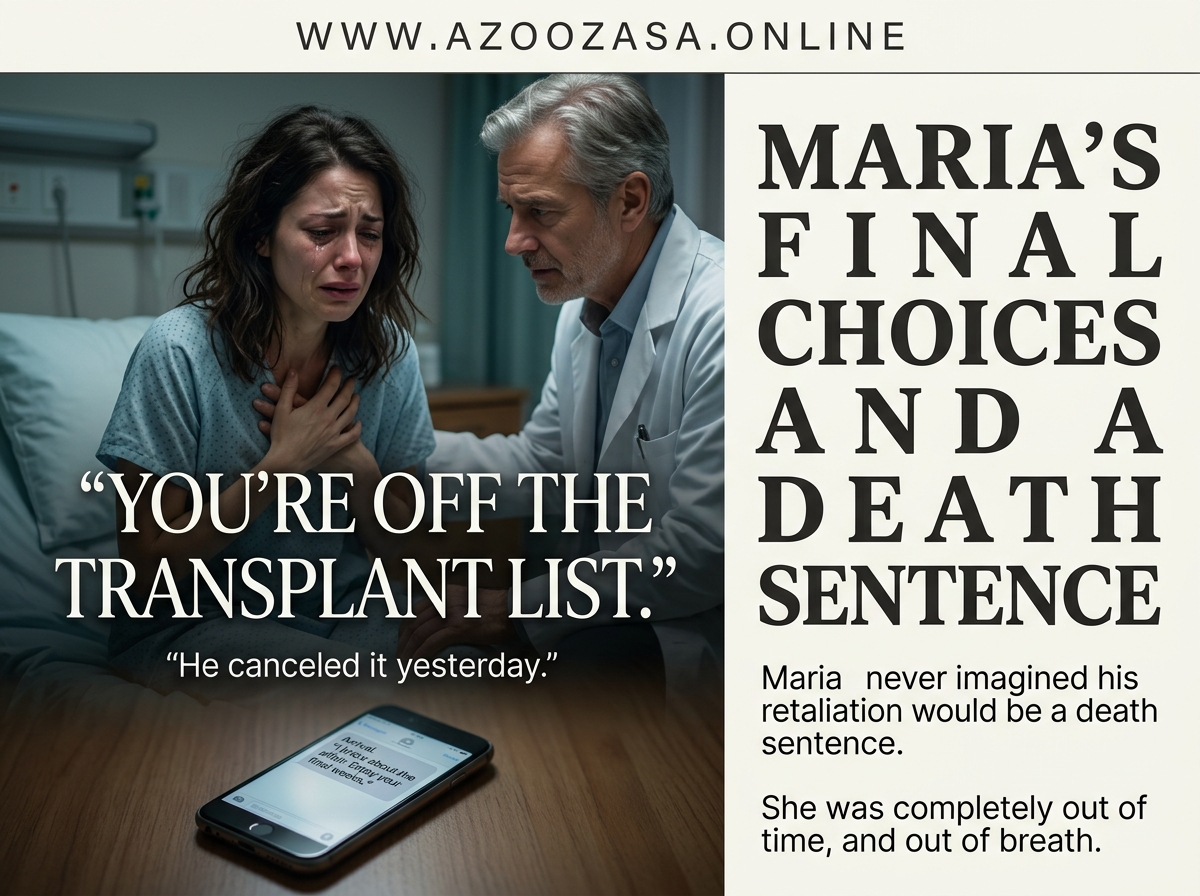
The doctor approached the foot of her bed, his eyes locked onto the linoleum floor before slowly rising to meet hers. “Maria,” he began softly, his voice carrying a weight that immediately suffocated the hope in the room. “You’re off the transplant list.”
## A Lethal Intervention
Maria stared at him, uncomprehending. The words felt like a foreign language. “Off the list? Did my vitals drop? Am I too weak for the surgery?”
“No, your physical metrics are stable enough for the procedure,” Dr. Aris replied, a deep frown etching lines into his forehead. “Someone intervened and revoked your insurance coverage.”
Maria gasped, her hand flying instinctively to her chest, clutching the thin fabric over her failing heart. “Revoked? That’s impossible. My premiums are fully paid. Who has the power to do that?”
The doctor looked away, staring out the small, rain-streaked window. “Your husband’s company policy. He is the primary policyholder. He canceled it yesterday afternoon, effective immediately.”
The monitor beside Maria’s bed began to beep faster, a frantic rhythm mirroring the sudden spike of sheer panic flooding her veins. Without comprehensive insurance, a heart transplant—a procedure costing upwards of a million dollars—was completely out of the question. The hospital board had strict protocols; without guaranteed funding, she could not remain on the active recipient list.
“There has to be a mistake,” Maria stammered, her fingers trembling as she reached for her cell phone on the bedside table. “David wouldn’t do this. He knows I’m days away from a match. He knows I’ll die.”
Dr. Aris offered a look of profound, helpless pity. “I have the hospital’s social worker looking into emergency state grants, but realistically… the bureaucracy takes months. Time we do not have.”
## The Price of Betrayal
Maria dialed David’s number, her hands shaking so violently she nearly dropped the device. It rang twice before going straight to voicemail. She redialed. Voicemail again.
David was an actuary, a man whose entire life was governed by risk assessment, calculated logic, and cold, unyielding precision. He was not a man prone to mistakes or impulsive administrative errors. If he canceled the policy, it was intentional.
As she prepared to dial a third time, the screen illuminated with a new text message.
> *I know about the affair. Enjoy your final weeks.*
Maria dropped the phone. It clattered against the plastic bedrail and fell to the floor.
All the air vanished from the room. The sterile walls seemed to close in on her. Julian. David had found out about Julian.
The affair had lasted six months—a reckless, passionate escape from the suffocating, emotionless structure of her marriage. Julian was an artist, chaotic and vibrant, everything David was not. When her heart condition suddenly deteriorated, Maria had ended the affair immediately, consumed by guilt and the stark realization of her own mortality. She had spent the last month in the hospital, playing the role of the devoted, tragic wife, believing her secret was safely buried beneath her medical crisis.
But David missed nothing. He had likely hired an investigator, audited her phone records, or simply connected the dots with his terrifyingly analytical mind. He hadn’t screamed. He hadn’t confronted her in a fiery rage. He had simply waited until her life depended on his resources, and then he systematically removed the safety net.
## Desperate Measures
Tears spilled over her eyelashes, hot and fast. She was trapped in a nightmare of her own making, realizing with sickening clarity that her betrayal had not only cost her marriage, but it had handed her husband the perfect, legal weapon for execution.
Her mind raced, frantically searching for a way out of the closing trap:
* **Appeal to the hospital administration:** She could beg the ethics committee for an emergency exception, though she knew they were bound by strict financial bylaws.
* **Contact legal counsel:** She could try to file an emergency injunction to reinstate the insurance, arguing medical abandonment.
* **Reach out to Julian:** She could beg her former lover for financial help, though she knew he lived paycheck to paycheck.
* **Beg David for mercy:** She could confess, apologize, and plead for her life.
She snatched the phone from the floor and dialed Julian’s number. It rang and rang, finally clicking over to an automated message. She texted him frantically: *David knows. He cut my insurance. I’m off the list. Please help me.*
Ten minutes later, the delivery receipt confirmed he had read it. No reply came. The chaotic, vibrant artist had vanished at the first sign of real consequence.
Next, she called a lawyer she had used years ago for a minor traffic dispute. After listening to her frantic explanation, the attorney sighed heavily through the receiver. “**Maria, I can file a motion,**” he said gently, “**but family courts and insurance disputes take weeks just to get a preliminary hearing. If your husband acted within his legal rights as the primary policyholder during an open enrollment period, or cited a change in life circumstances, an injunction isn’t guaranteed.**”
## The Ticking Clock
Hours bled into the evening. The hospital room grew dark, illuminated only by the harsh, digital glow of the medical equipment keeping her barely tethered to the world.
She stared at the ceiling, her chest aching with every shallow breath. David’s retaliation was a masterstroke of passive-aggressive murder. He didn’t have to pull a trigger or slip poison into her IV. All he had to do was nothing. He had simply withdrawn his protection and let nature take its brutal, inevitable course.
She had broken his heart, and in return, he was ensuring hers would simply stop beating.
The social worker came and went, offering sympathetic looks and stacks of state aid paperwork that felt like a cruel joke. The nurses adjusted her oxygen, their eyes avoiding hers, already looking at her as if she were a ghost haunting the cardiac ward.
Maria pulled her phone to her chest, resting it over the weak flutter of her failing muscle. She was completely out of time, out of options, and rapidly running out of breath. She closed her eyes, the rhythmic beep of the monitor the only testament to the few days she had left.
—
How do you think Maria will choose to spend her final, fleeting days now that all hope of a transplant is gone?


0 comments