
📋 Table of Contents
Grapes have been cultivated for thousands of years and are a staple in diets around the world, whether enjoyed fresh, dried as raisins, or pressed into juice. Though small, these juicy fruits deliver a wealth of health benefits, largely thanks to their impressive concentration of powerful plant compounds.
Cardiovascular and Heart Health
-
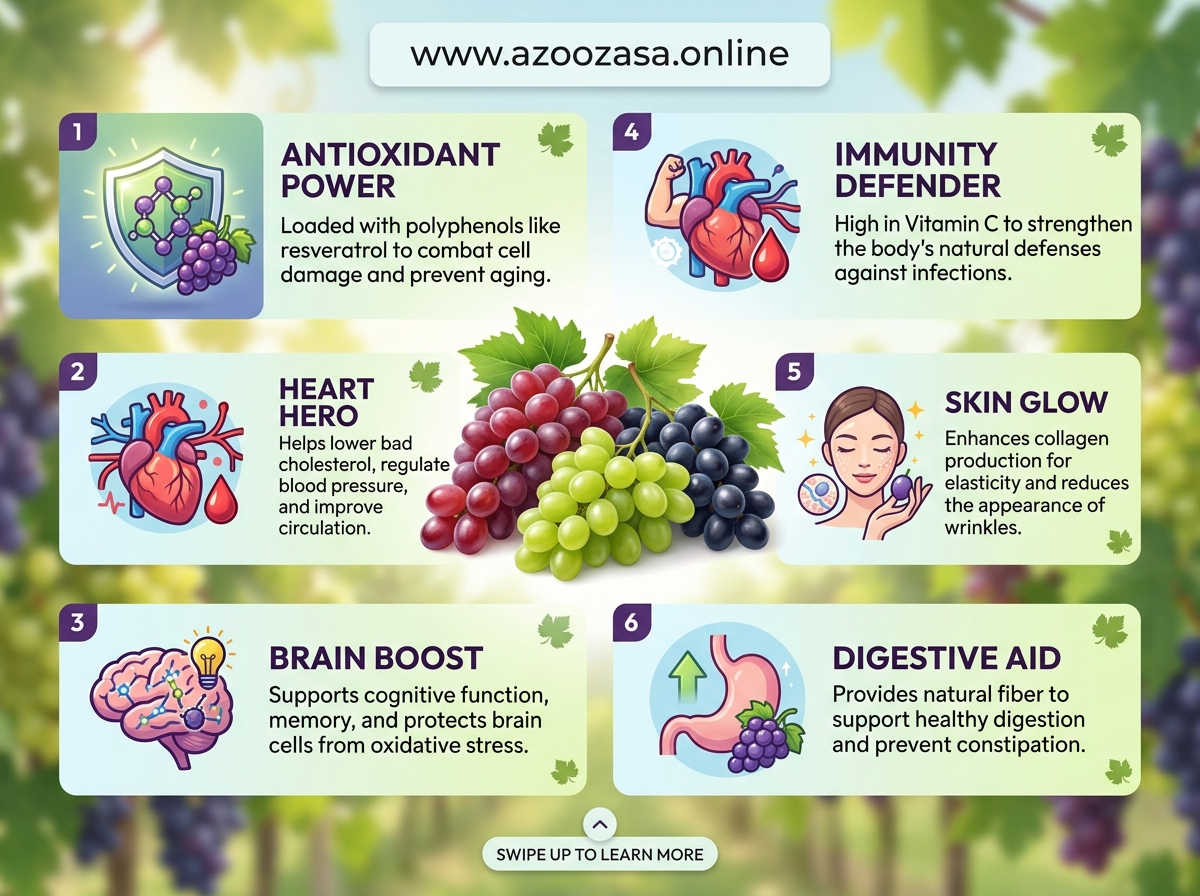
The Power of Resveratrol: Found primarily in the skins of red and purple grapes, resveratrol is a highly studied antioxidant famous for its heart-protecting properties. It can help reduce inflammation, prevent platelet build-up, and protect against heart disease.
-
Blood Pressure Regulation: Grapes are a good source of potassium, a mineral crucial for maintaining healthy blood pressure levels. Potassium helps your blood vessels relax and counters the negative effects of excess sodium in your diet.
-
Cholesterol Management: Compounds found in grapes may help protect against high cholesterol levels by decreasing cholesterol absorption in the digestive tract.
Cellular Defense and Brain Support
-
Broad-Spectrum Antioxidants: Beyond resveratrol, grapes are packed with Vitamin C, beta-carotene, quercetin, and lutein. These antioxidants work together to defend your cells against oxidative stress, which is linked to chronic diseases and cellular aging.
-
Cognitive Function: Some studies suggest that the antioxidants in grapes—particularly resveratrol—can improve blood flow to the brain, which may help protect against neurodegenerative diseases and support memory and attention.
-
Eye Health: Grapes contain lutein and zeaxanthin, two antioxidants that are essential for eye health. They help protect the retina from damage caused by blue light and oxidative stress, potentially lowering the risk of macular degeneration.
Hydration and Digestion
-
Highly Hydrating: Grapes are composed of about 82% water. Snacking on them is an excellent way to boost your daily fluid intake, which is essential for skin health, temperature regulation, and overall cellular function.
-
Digestive Regularity: The combination of high water content and dietary fiber makes grapes a great natural remedy for maintaining regular bowel movements and preventing constipation.
Quick Grape Comparison
While all grapes are healthy, their nutrient profiles vary slightly depending on their color:
| Grape Type | Flavor Profile & Key Benefit | Best Used For |
| Red/Purple Grapes | Sweet and slightly tart. Highest in resveratrol and anthocyanins for maximum heart and brain protection. | Snacking, freezing for a cold treat, or roasting. |
| Green Grapes | Crisp, mild, and often the most tart. Excellent source of Vitamin K for bone health and blood clotting. | Adding crunch to chicken or tuna salads, or eating raw. |
| Black Grapes | Intensely sweet and rich. Packed with antioxidants, often having the deepest flavor profile. | Cheese boards, snacking, or making homemade jams. |
Do you have a favorite color of grape to snack on, or do you prefer them dried as raisins?



0 comments